Coloring cat pages you can print, download or colour right here
Every picture on this page is a real coloring cat drawing in clean black line art on white paper, made for small hands and short attention spans. Open one full screen, save it as a PDF for printing, or send it straight into our online colouring studio and fill it with colour on a phone, tablet or laptop. Nothing to sign up for and nothing to pay.
Start with the pictures
tap any drawing to open itThese are the cat pages in this set, drawn in the same style — thick outer lines, big open shapes, no tiny corners that a crayon cannot reach. Look through them, then pick one. If a page looks too easy for your child, the same cat appears again below with more detail to fill.
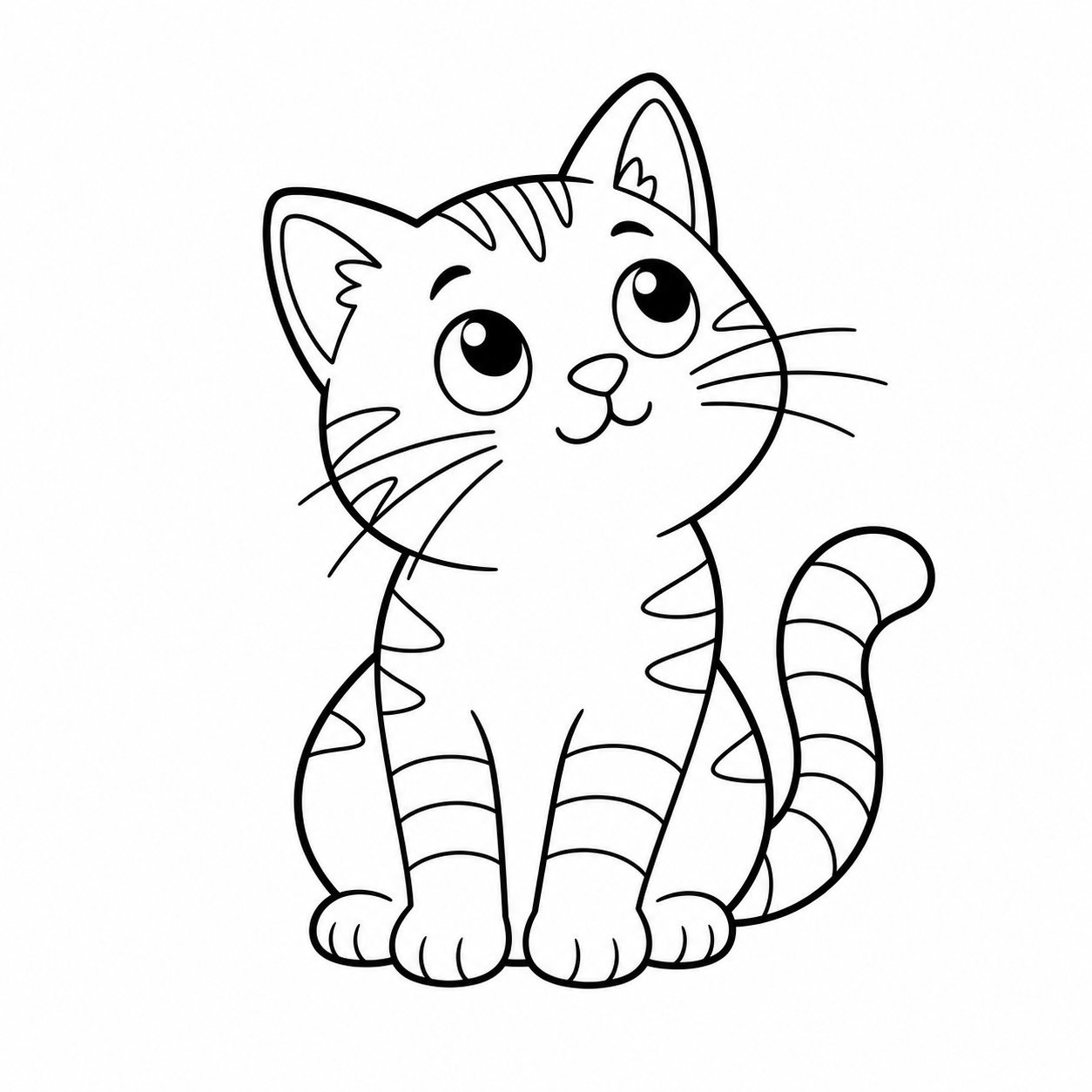 Curious Tabby Cat
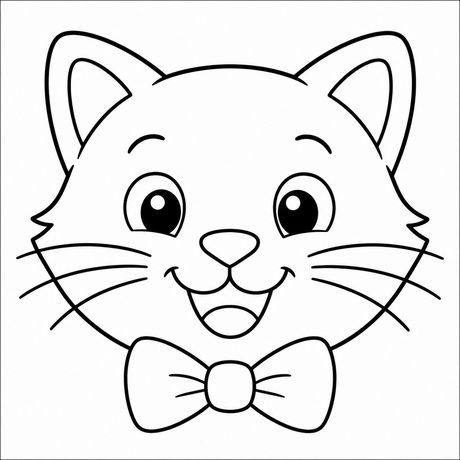
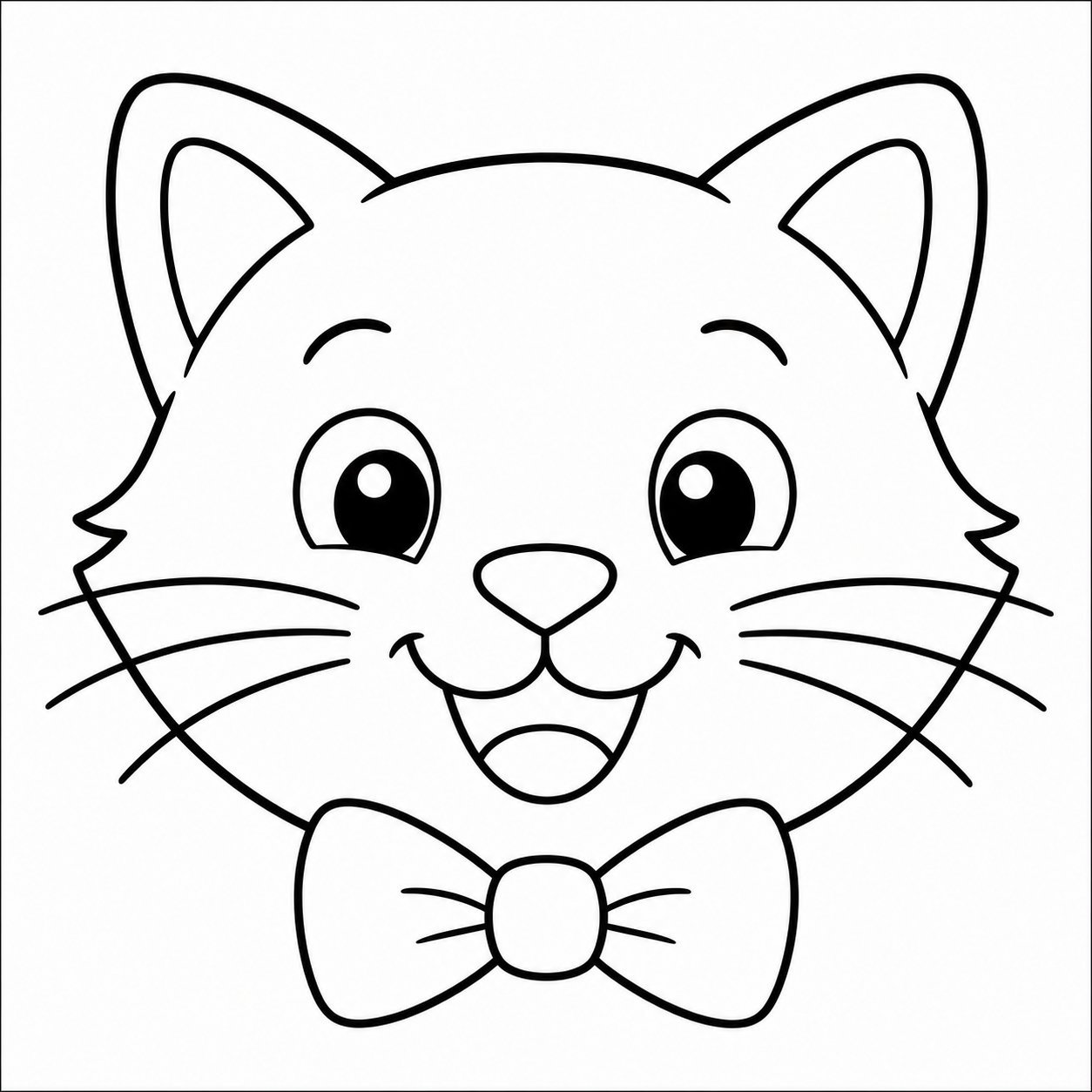 Cat With A Bow Tie
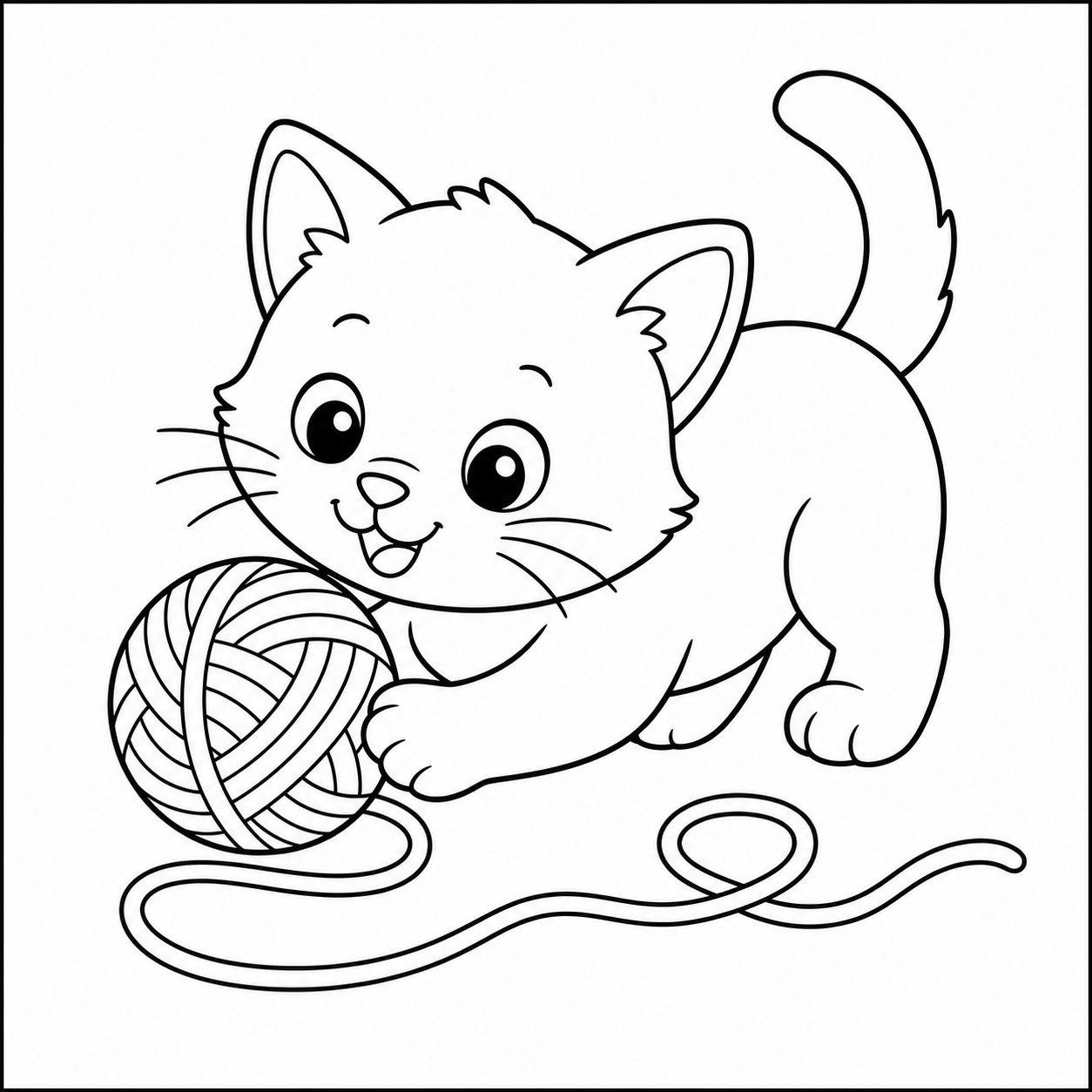 Kitten And Yarn
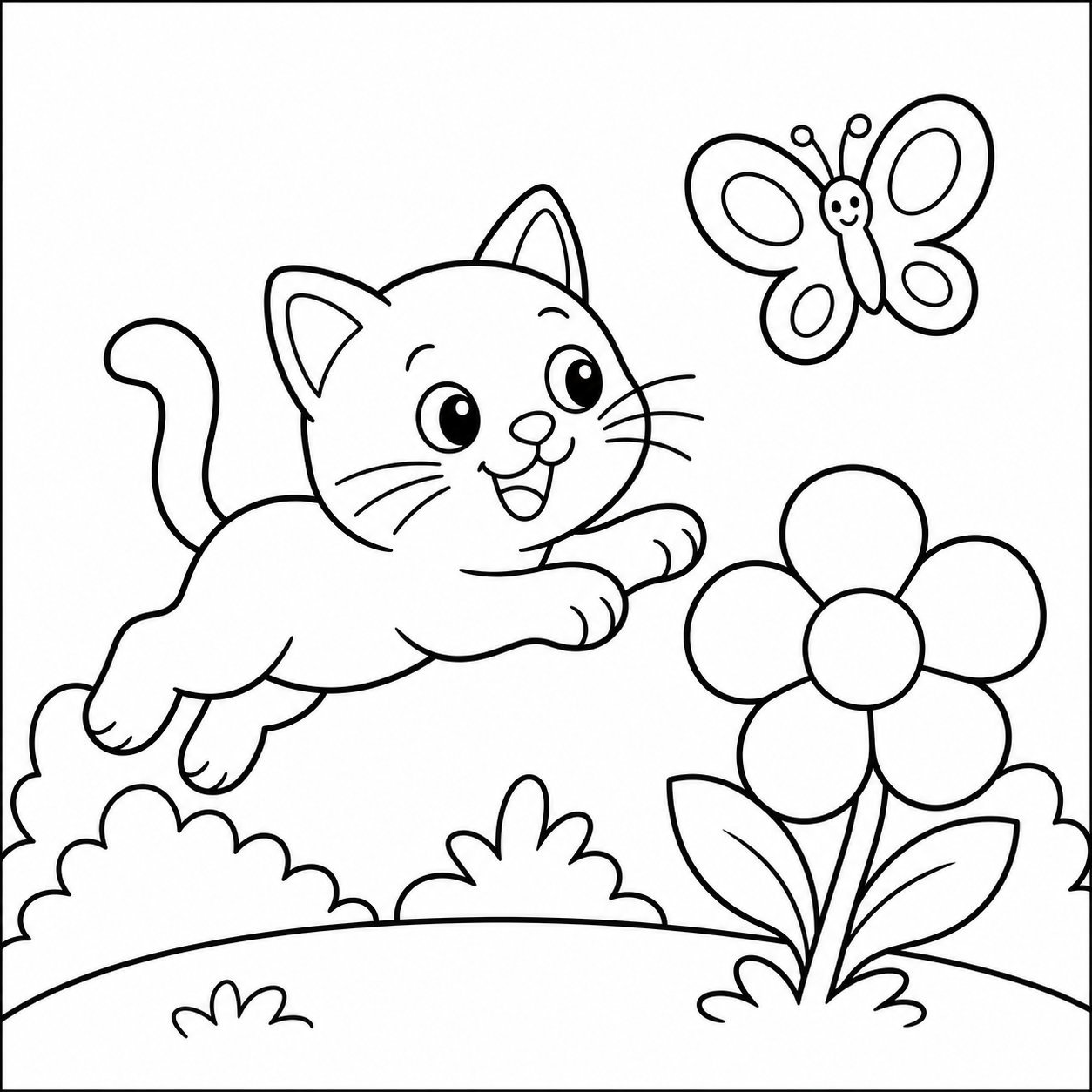 Cat Chasing A Butterfly
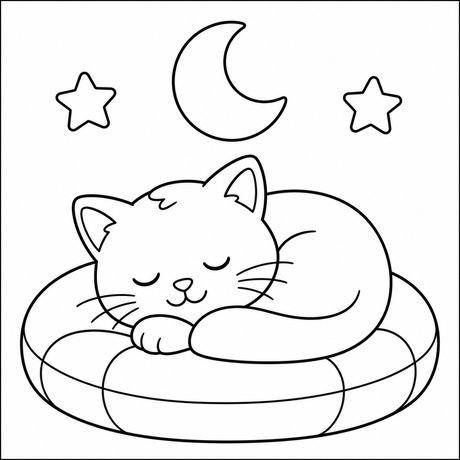
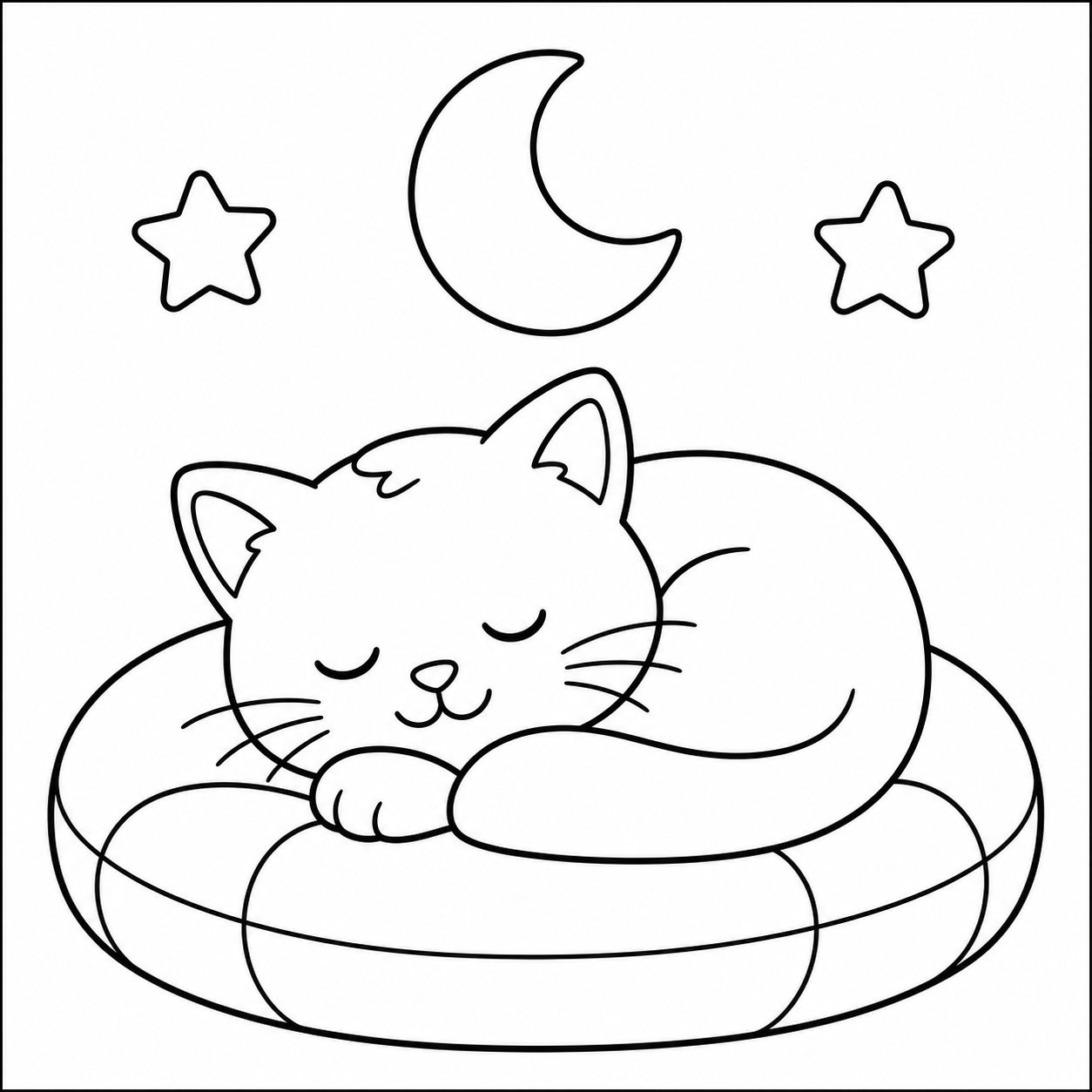 Sleepy Kitten
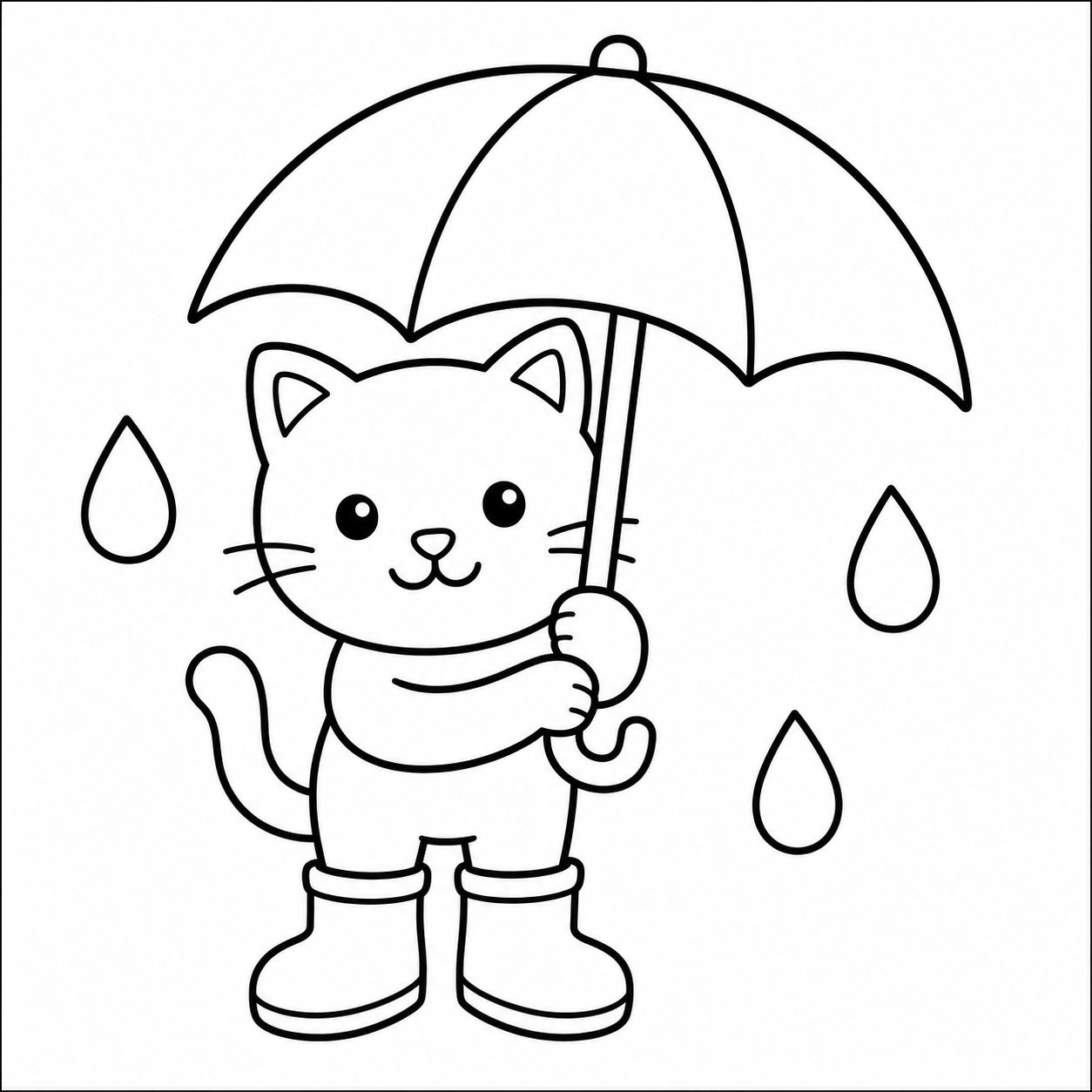 Cat In The Rain
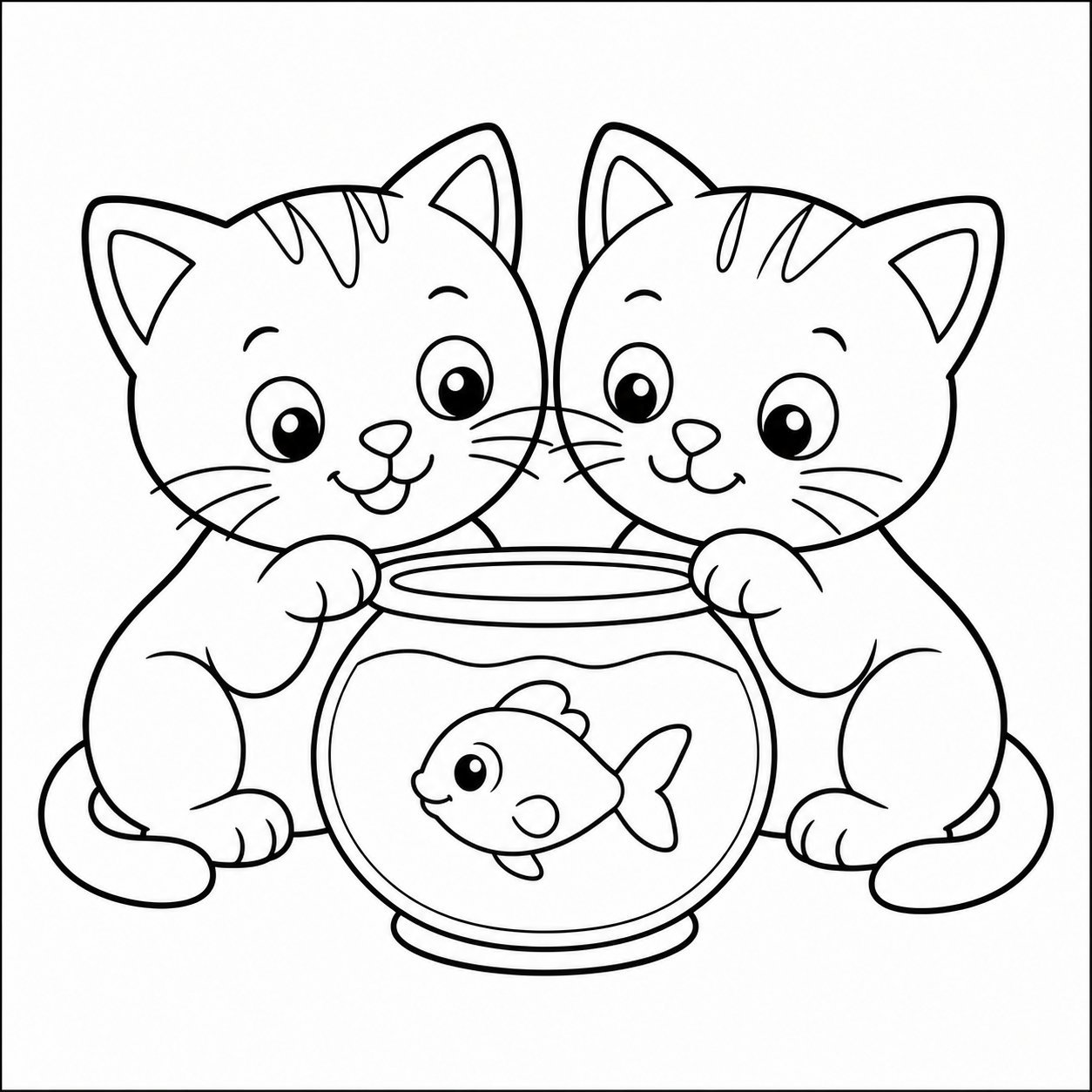 Two Kittens And A Fish
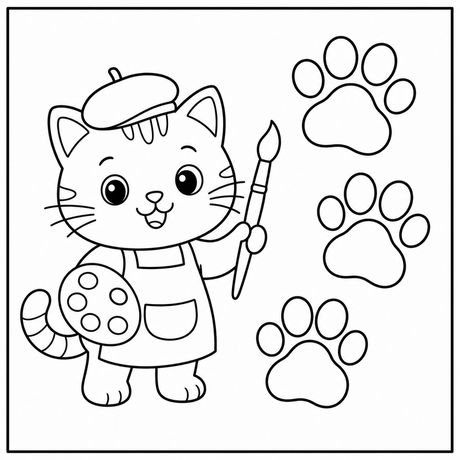
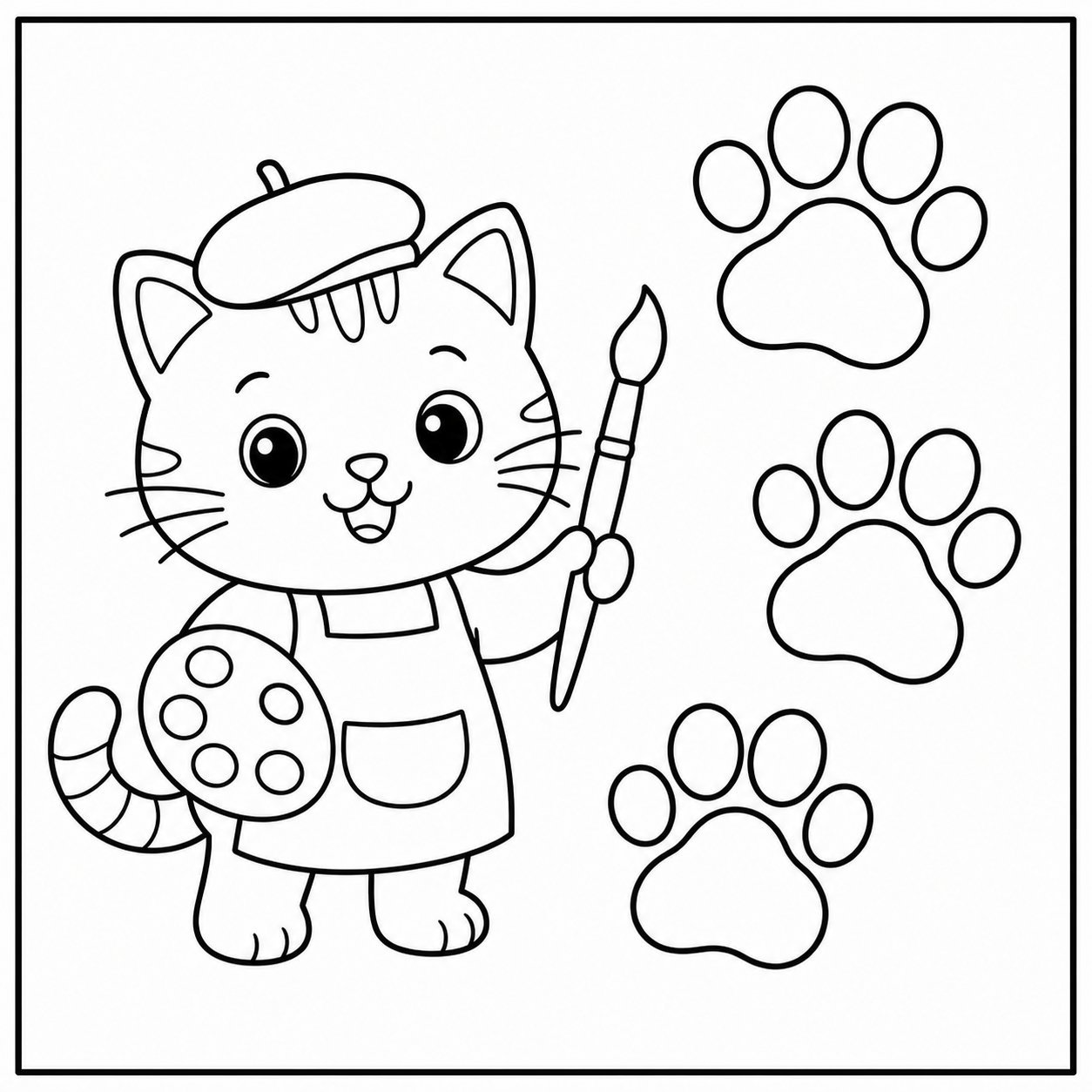 Cat Painter
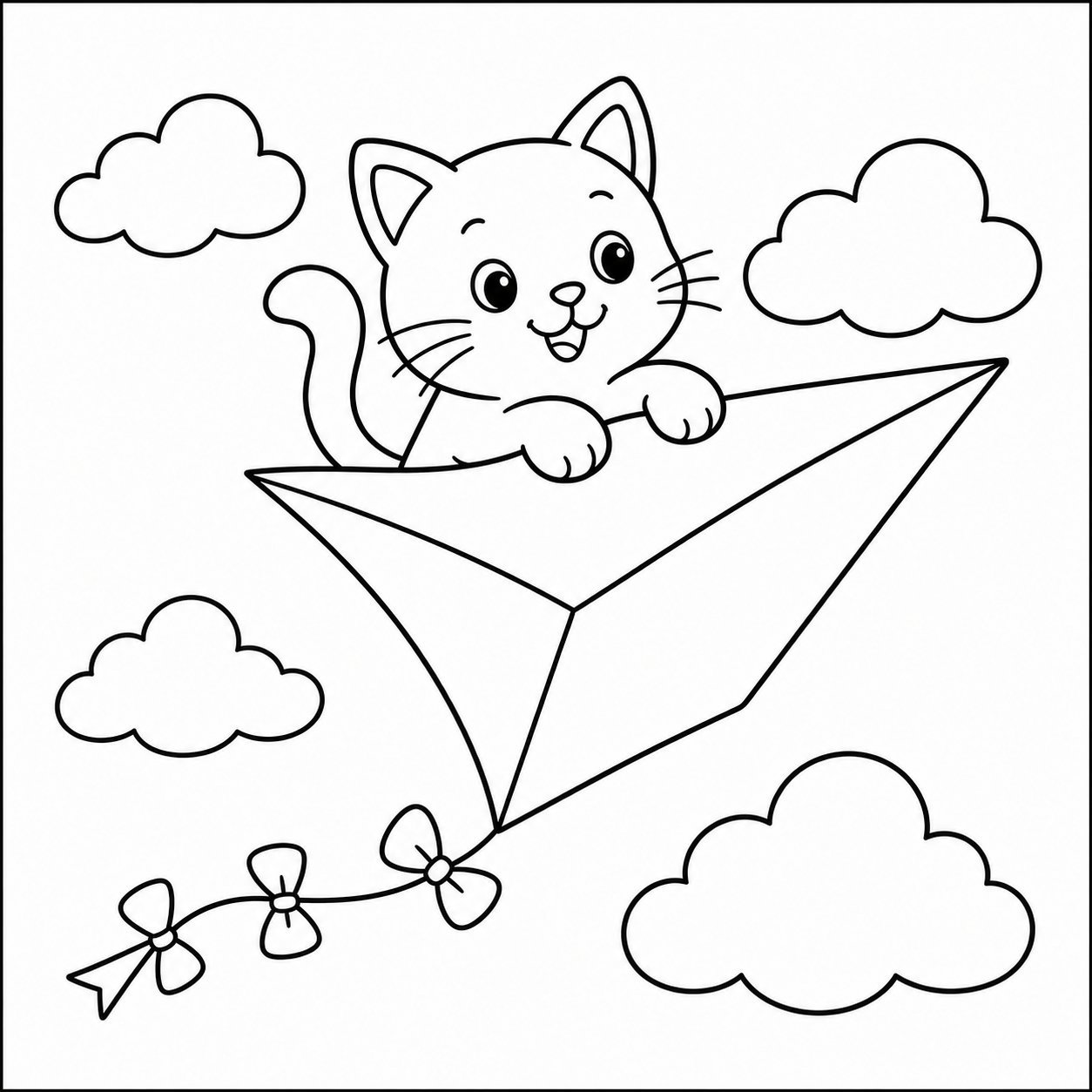 Cat On A Kite
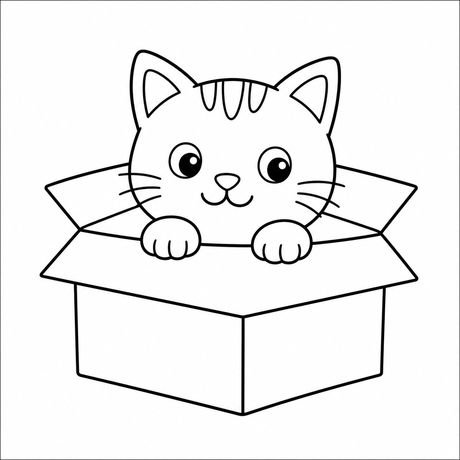
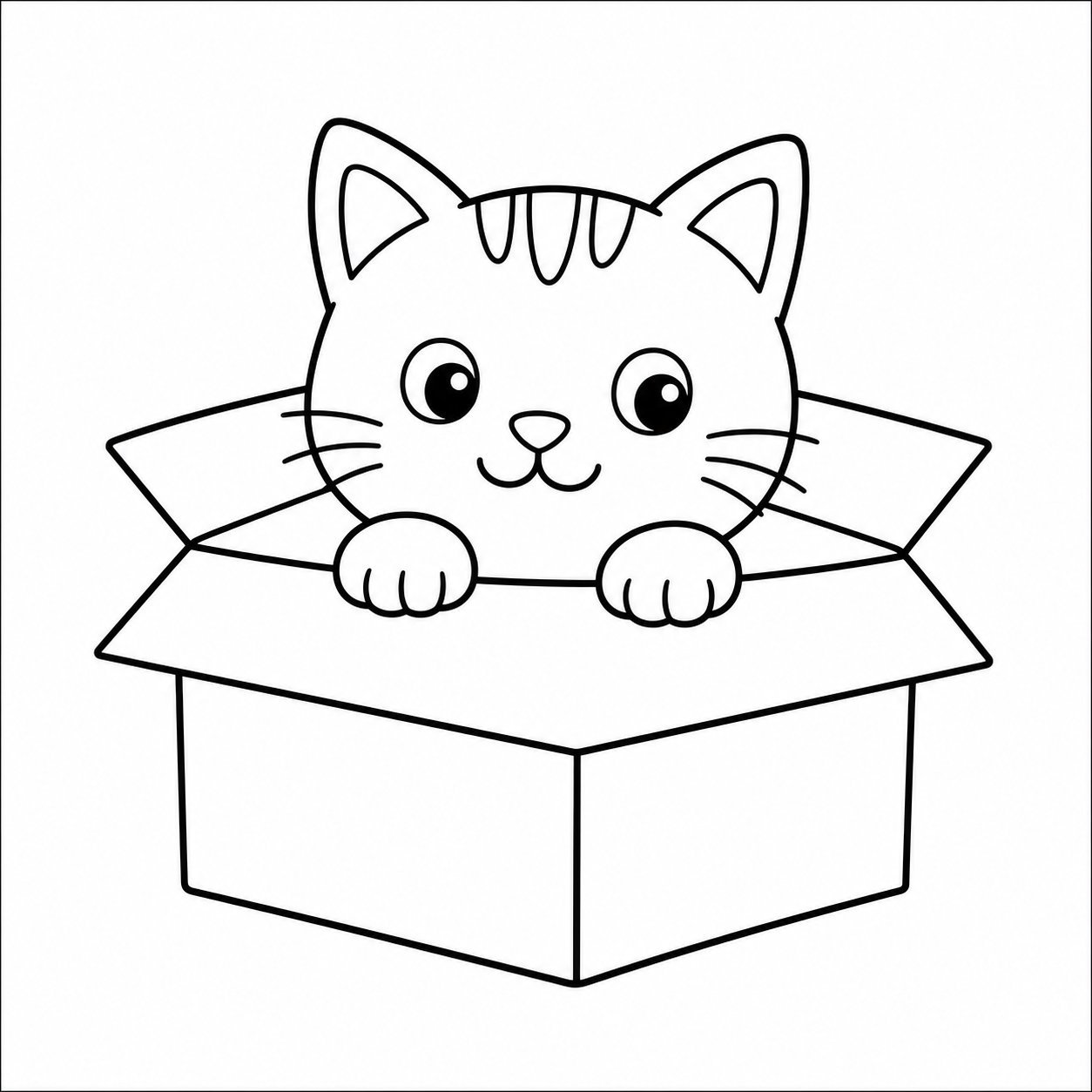 Cat In A Box
Every drawing below is the same artwork you see in this gallery, so you can look first and choose later — on paper or on a screen.
One by one, with three ways to use each page
view · PDF · onlineUnder every drawing there are three buttons. View opens the page full size. PDF makes a print-ready file on your own device — your browser builds it, so there is no waiting for a server and nothing is uploaded anywhere. Colour online loads the same drawing into the studio, already zoomed to fit the screen, with the paint bucket selected.
Curious Tabby Cat
A tabby sits up tall and looks at something just out of frame. Big ears, big eyes and one swishy striped tail to colour in.

Cat With A Bow Tie
A close-up cat face wearing a bow tie. The friendliest page to start on, because it has only a few large shapes.

Kitten And Yarn
A kitten pounces on a ball of yarn and the string trails across the page. Pick one bright colour for the yarn.

Cat Chasing A Butterfly
A cat leaps after a butterfly in the garden, with one big flower beside it. Try warm colours for the cat and cool ones for the sky.

Sleepy Kitten
A kitten curled up on a round cushion under a moon and two stars. A good bedtime page for quieter colours.

Cat In The Rain
A cat in rain boots stands under a big umbrella with three drops falling. Colour the boots and the umbrella different colours.

Two Kittens And A Fish
Two kittens sit side by side, looking into a fish bowl. Give each kitten its own colour and see which one your child likes better.

Cat Painter
A cat holds a paint brush next to three big paw prints. Colour each paw print a different colour, then colour the brush.

Cat On A Kite
A cat rides a paper kite above the clouds. A good page for practising a light blue sky with white clouds left empty.

Cat In A Box
A cat hides inside a cardboard box with only its head and paws poking out. Colour the box a warm brown and the cat any colour you like.

Take the whole set as one PDF, like a small book
One press puts every cat drawing on this page into a single PDF, one drawing per page, sized for normal printer paper. Print it, fold it in half and staple the fold — you get a little cat colouring book that survives a school bag. This also happens on your device; no file leaves it.
Two ways to get the book. The button above builds one PDF file on your device, and a status line tells you when it is ready. If that download is blocked, the button simply opens the print view underneath: press Ctrl+P (⌘+P on a Mac) and choose Save as PDF — one drawing per page, same result. In the print window pick portrait, margins “none” or “minimum”, and Two-sided — flip on long edge so it folds into a booklet.
🖨 Print view — all cat pages, one per page (no download, no scripts needed) hide this view
This is the book: every drawing on this page, one per sheet. Press Ctrl+P (⌘+P), set the destination to Save as PDF, and you have the same file the button above builds. Nothing here depends on JavaScript — it works even when downloads or scripts are blocked.
The complete coloring guide
printing · tools · ages · classroomEverything below is written for grown-ups who are setting a child up with a coloring cat page: how to choose one, how to print it so the lines stay thick, which crayons suit which age, and how to keep the whole thing fun for ten minutes or an hour.
01What makes a good coloring cat page
A coloring cat page is not just a cat with lines around it. The best pages are drawn for the hand that will hold the crayon, which means four things at once: thick outer lines, big open shapes, a friendly face, and nothing so small that a stubby crayon cannot reach it. Every drawing on this page follows those four rules, so the cat stays the star of the picture while the shapes stay easy to fill.
Thick lines do more than look bold. A line about two millimetres wide gives a young child a wall to stop against, and the eye follows a wall far more easily than a hairline. Big shapes matter just as much: a round belly or a wide ear can be filled in a few strokes and the child sees progress, which is what keeps a three-year-old going for ten minutes instead of one. A friendly face — wide eyes, a soft smile, ears that point up rather than down — is the reason a child picks the cat over an abstract shape.
Small details are the usual mistake. Whiskers are fine, but a page covered in tiny fur strokes, five flowers and a fence turns colouring into a chore. In our set the extra detail sits outside the cat — a ball of yarn, a butterfly, a cardboard box — so a child can colour the cat and leave the rest plain, or go back for the background later. If you want to see this difference at full size, tap View on any drawing above; the picture opens on a clean white page where you can zoom in on the line weight.
For a wider look at where colouring pages came from, the history of the colouring book is a surprisingly fun read — the format has been built for exactly this purpose for nearly a century.
02Why a coloring cat page works for small hands
Colouring a cat is easier than colouring most other animals, and it is not only because children like cats. A cat is built from shapes a small hand already knows: a circle for the head, two triangles for the ears, an oval for the body, a long curve for the tail. Those shapes are wide enough to hold a crayon grip and simple enough that a four-year-old can predict where the line goes next. Prediction is the quiet skill inside colouring — the hand moves toward a boundary the eye already found.
The paw is another reason a cat page works so well. Toes, nose and the pad of a paw are the first “small things” a child is willing to attempt, because they are attached to something big and safe. A child who refuses to colour a flower’s thin petals will happily dot three tiny paw pads, since the paw is round and the mistake is invisible.
There is an emotional side too. A cat has a face, and faces hold attention. When a child colours the face, they are making choices about a character: is this cat happy, sleepy, surprised? Those choices turn a repetitive motor task into a small story, and stories are what turn a five-minute activity into a twenty-minute one. If you would like the same animal drawn simpler or busier, our studio lets you colour the same picture on a screen with a fill bucket, so the child controls the difficulty.
Developmentally, colouring supports the hand skills behind writing; the American Academy of Pediatrics family site, the American Academy of Pediatrics family site, keeps a plain-language library of play and skill-building activities for each age if you want the wider picture.
03Coloring cat pages on paper or on a screen: how to pick
Both routes use the same drawing, so neither is the wrong choice. They are simply good on different days, and a page you can flip between is better than a page that forces one answer.
| Choose paper when… | Choose the studio when… |
|---|---|
| You want quiet, no light from a device, and a finished page to keep. | Any mistake must be undoable — a toddler, a tired child, or a “bad day”. |
| The child grips a crayon well and can steer inside a fat line. | Fine grip is still coming along; tapping beats holding. |
| You have heavier paper or a board to sit under thin printer paper. | You are travelling, in a waiting room, or there is no table. |
| You want to mix media: crayons, then coloured pencils on top. | You want every colour available without a box of thirty pencils. |
| A class or a sleepover needs one page each, printed in a batch. | You want to keep the finished work as a picture file to send to family. |
The rule of thumb: paper for calm, screen for wobbly. When a child is frustrated by going outside the lines, moving to the studio removes the penalty — a tap of the bucket fills the shape and the undo button takes it back. When a child is happily absorbed, paper keeps the eyes resting and gives you a drawing to stick on the fridge.
If the screen session runs long, an eye break genuinely helps; the American Academy of Ophthalmology guide to screen eye strain explains the simple 20-20-20 pattern — every twenty minutes, look at something twenty feet away for twenty seconds. Nothing else needs to change.
04How to print a coloring cat page so it comes out right
Our PDFs are built to Letter and A4 paper without any trimming, but three settings decide whether the print looks sharp or grey and thin. Everything below applies to every page in the set.
| Setting | What to choose | Why |
|---|---|---|
| Scaling | Actual size, fit off | Keeps outlines thick enough for small hands. |
| Colour | Black and white / greyscale | Line art has no colour to lose; ink stays cheap. |
| Paper | Plain 80 gsm, or 120 gsm for markers | Thin paper lets marker ink bleed through. |
| Orientation | Portrait | The drawing is square, so the page fills top to bottom. |
| Margins | Default or minimum | There is already white space around the cat. |
| Two-sided | Flip on long edge | Makes the booklet lie flat when folded. |
Two more details worth knowing. First, printers shrink to fit by default on some setups, which turns a 2 mm outline into a 1.6 mm outline; choosing “Actual size” keeps the fat lines fat. Second, if the print comes out with a grey cast rather than clean white, the printer is treating the JPEG as a photo — switch the paper type to “plain paper” or the quality to “draft” and the whites open up immediately.
For a quick two-sided booklet, the 📚 button at the end of this page puts the whole set into one file so you do not have to print each page and shuffle them.
If you buy paper in bulk for a classroom, the FSC, the paper sourcing label label is a good sign the fibre was sourced under audited rules; it has no effect on print quality, but it makes a stack of hand-outs easier to justify to a school office.
05Crayons, pencils or markers for a coloring cat page
The tool changes what a child can do on the same picture. There is no “best” choice, only a choice for the hand and the day.
- Chunky crayons — the default for ages two to five. A fat barrel forces a fist grip that small hands already have, and wax covers a wide shape in two strokes. Slightly greasy, slightly smudgy, excellent for confidence.
- Wax pencils / oil pastels — brighter and smoother than crayons, with a smaller tip, so ears and paws become possible. They need a little more control and they do mark fingers.
- Coloured pencils — for six and up. Layering two colours on the cat’s fur teaches blending better than any explanation, but pressure control is still developing in most five-year-olds.
- Washable markers — the fastest full coverage, and the most unforgiving of thin paper. Put a sheet under the page and let the child enjoy how little effort it takes.
- Paint and a brush — a page printed on card becomes a painting surface, which is a completely different (and very loud) activity for a rainy morning.
If you have ever wondered why a crayon is wax and not paint, this short history of the crayon covers the practical history in a page — and explains why the shape of a crayon has barely changed since it was invented.
One tip that works with every tool: colour the outline first. Tracing the boundary of the cat’s body creates a moat, and filling inside a moat is far easier than filling inside open white space. It also turns “stay inside the lines” into something the hand is doing rather than something a parent keeps saying.
06Coloring cat pages by age: what to expect
Expectations are where most colouring time goes wrong. Set the bar one notch below the child and the same page becomes a success at every age. This is what we see in our own house and in the messages parents send us.
| Age | How they hold the crayon | What to hand them |
|---|---|---|
| 18 months – 2 years | Fist grip, whole arm moves | The two biggest pages only: the face with the bow tie, the cat in the box. |
| 3 years | Fist or early tripod | Any single cat, one colour at a time, no demand to stay inside. |
| 4 years | Tripod grip, lines still wobbly | A page with props, plus a second colour for the tail or the ears. |
| 5 years | Better control, loves showing off | Print two of the same page and colour them differently on purpose. |
| 6 – 7 years | Precise, patient | Patterns, backgrounds, and the trickier painter or kite pages. |
| 8 and up | Full control | Use the pages as reference: draw their own cat, then colour that. |
Two notes for the older end. A seven-year-old may call colouring “babyish” until you hand them a page with a pattern to invent — colour the cat in stripes, spots or a rainbow, and suddenly it is a design job. And a child who only wants the fill bucket on a screen is not being lazy; on a bad-sleep day or in a restaurant, the studio is a legitimate way to keep the drawing habit alive.
07A ten-minute coloring cat routine that actually gets used
Colouring works best as a small, repeatable habit rather than a big weekend project. This is the loop parents tell us works on school days, and it takes about ten minutes of your time.
- Let the child pick from the gallery. Choosing is half the engagement. Open the page, scroll the tiles, stop at the first “this one”.
- Pick the tool together, one only. “Today is the blue crayon day” removes thirty decisions before the first stroke.
- Colour the outline first, side by side. Five seconds of you tracing a paw shows the trick without a lecture.
- Fill, then name. Ask what the cat is doing while the child fills the belly. Narration holds attention far better than instructions do.
- Finish early on purpose. Stop while it is still fun, and put the page on the fridge or in the studio gallery to save. Tomorrow’s session starts easier.
Keeping a page is genuinely important for young children: the visible pile of finished work is what makes them come back to colouring instead of reaching for video. If you print, use a binder or a wall clip. If you colour online, tap Save picture in the studio and the finished file lands in your own photos — nothing is uploaded to us.
For a screen-time framework around short sessions like this, the American Academy of Pediatrics family site has parent-facing guidance on balance and children’s media that is worth reading once and referring back to.
08Helping a child stay inside the lines on a coloring cat page
Say the words “stay inside” out loud once and you have turned colouring into a test. The workaround is to change the picture or the tool instead of changing the child.
- Choose the biggest shapes. Our bow-tie face and the box cat have the fewest edges per square inch — a natural starting point.
- Draw the boundary first. Colouring the line in a dark colour before filling makes the edge visible in the same colour the hand is steering toward.
- Use a shorter crayon. A stub forces fingers closer to the paper, which improves control more than any grip aid.
- Rotate the paper, not the wrist. Turn the page toward the hand as the shape fills; this is the single biggest trick teachers use.
- Move the hard parts to the screen. The studio’s fill bucket has no lines to cross, so the finished cat looks great and the child still made every colour choice.
And when a six-year-old does cross the line, let it stand. A visible mistake on the page is a decision the child made about the cat, not a failure of the hand. The line art on this page is deliberately forgiving: black outlines on white paper mean a stray stroke mostly disappears into the border.
More open-ended art ideas that are not about staying inside anything — including plenty with animals — live at Tate Kids for more art activities.
09Colour mixing: the one skill a coloring cat page teaches best
A cat is a small, safe place to experiment. Nobody argues about whether a cat can be purple, which makes a page the perfect laboratory for mixing. Try these as games rather than lessons.
- Two-colour fur. Pick a body colour and a stripe colour from the other side of the box. Green stripes on an orange cat: allowed, and the reasoning is fun.
- Warm cat, cool room. Warm colours for the cat, cool colours for the background, so the cat jumps off the page. This is the first lesson in contrast a child will ever enjoy.
- Layer test. Light pencil first, darker pencil on top; then press harder. Three strengths of the same colour, no new pencils needed.
- One colour only. A whole cat in a single blue, using only pressure. Excellent for children who freeze in front of thirty crayons.
- Night cat. Fill the background heavily and leave the cat white. A page printed from this set works brilliantly in reverse.
The studio has five grouped palettes for exactly this kind of play, and every shape can be filled and unfilled in seconds, so a child can try “what if the ears are pink?” with zero cost. Open any of the cat drawings in it with the Colour online button under the picture — the fill bucket is already selected so the first tap does something.
Keep the vocabulary light and specific: “that green looks bright next to the pink” beats “nice”. Children notice the observation and quietly adopt the language.
10Making a coloring cat booklet at home
A booklet turns loose pages into something a child is proud of, and the whole process takes under five minutes with a normal printer.
- Press the 📚 button at the end of this page. Every drawing on this post goes into one PDF, one page per picture, already sized for Letter or A4 paper.
- Print double-sided with “flip on long edge” so the pages land in order.
- Put the stack face up, fold it in half across the middle, and open it flat again.
- Two staples in the fold — or one, if the stapler is too small to reach — and you have an eight-page booklet that stays closed in a bag.
- Add a cover: let the child draw a cat on the front and write the title themselves. Their spelling is part of the artefact.
Because the file is built on your own device, you can print the same booklet twice — one for home, one for the grandparents — with no download limit and no watermark. If the finished book needs a place to keep loose pages as well, a cheap clip frame on a wall beats a folder: a cat that nobody sees is a cat nobody remembers colouring.
The booklet route also solves the “next page” argument. Choose the order once, at the start, and the pages simply arrive one after another.
11Using coloring cat pages in a class, group or sleepover
Groups are where a printable page earns its keep: no device to charge, no app to install, no account to create for a seven-year-old, and one file that covers a whole table.
- Print per child, not per design. Everyone colouring the same cat is calmer than everyone choosing; the pages look different anyway because the children do.
- Laminate or sleeve one master. A printed page inside a clear sleeve can be coloured with a dry-erase marker and wiped for the next group.
- Use the studio on the shared board. One screen, one cat, the class calling out colours is a surprising amount of fun and it teaches turn-taking.
- Finish with a wall. Tape the pages up in a row at the children’s eye level, not the teacher’s.
- Keep a spare pile. Someone always brings a page home and someone else needs a new one.
These pages are free for exactly this kind of use — print as many copies as your group needs for your own class or family, keep the credit line that is already printed on the page, and do not resell them. Everything in plain language sits in our terms.
A cat is also an easy anchor for a topic week: count the whiskers, name the kittens, write one sentence about what the cat is doing. One page quietly becomes four activities in one.
12Cat drawing ideas to try after the coloring cat pages
Sooner or later a child wants to draw the cat themselves instead of colouring ours. That is the moment to hand them structure, not a blank page, and a cat is one of the kindest things to draw from shapes.
- Circle, then ears. One circle for the head and two triangles. Done — that is already a cat.
- Face inside the circle. Two eyes, a small triangle nose, and a curve under it. Eyes wide apart read as friendly; eyes close together read as angry, which children notice quickly.
- Body as a bean. A big oval under the head, four short legs as loaves.
- Tail last. One long line. If it looks wrong, add a second curve — the tail can be straight, curled, or question-mark shaped, and each changes the cat’s mood.
- Then colour it. Use the same crayons and the same confidence built on our pages.
If the drawing fights back, go back to the coloring cat pages for a week and try again; the observation quietly happens while the hand is busy filling a shape. That loop — colour, copy, invent — is how almost every child learns to draw an animal, and it is exactly what these pages were built to support.
When you want a new subject, the other animal pages are one tap away below, and the studio will open any line drawing we have on it.
Colouring a cat page without tears
for grown-upsQuestions parents ask first
Are these coloring cat pages really free?
Yes. Every drawing here is free to view, to save as a PDF, to print for your family or class, and to colour in the online studio. There is no sign-up, no watermark and no page you have to unlock.
Can I use one picture on my own website or worksheet?
Please link to this page instead of re-hosting the files, so the drawing keeps coming with credit to ColoringVemsy and the same free terms. For anything else — a school pack, a printed hand-out with a different layout — write to us and we will say yes to almost any classroom request.
Why is the PDF black and white when the picture looks grey on my screen?
Printers add a light grey tint when they think a JPEG is a photograph. Change the paper type to plain paper, or the quality to draft, and the whites open right up. Nothing is wrong with the file.
Does the online studio save my child’s picture to your server?
No. The studio paints on your own device. Saving puts the finished picture into your own photos or downloads folder, and nothing is uploaded to us. Your work is also kept locally so it is still there when you come back on the same device.
Can a phone or tablet colour these pages?
Yes — the studio is built for touch first, and the fill bucket needs one tap. Phones get a sticky tool dock so the paint stays under the thumb. A mouse and keyboard work the same way.
Which cat page should a two-year-old start with?
The close-up face with the bow tie, or the cat in the box. Both have the fewest edges and the biggest open shapes, so a fist grip still gets coverage.
Can I request a cat that is not in the set?
Yes. Tell us what you need — a specific breed, a cat with a sibling, a cat in a costume, or a page for a topic your class is studying. Requests shape what gets drawn next.
What if a page shows the wrong picture or a broken link?
Tell us and we will fix it fast, and we will send you the working file directly. Contact details are at the bottom of this page, and every page on the site links to the same address.
More animals to colour
The cat pages sit inside a growing set of animal drawings. If your child finishes a cat and asks for another, one of these takes over the job.