Dinosaur coloring pages you can print, download or colour right here
Every picture on this page is a real dinosaur coloring drawing in clean black line art on white paper, made for small hands and short attention spans. Open one full screen, download it as a PDF for printing, or send it straight into our online colouring studio and fill it with colour on a phone, tablet or laptop. Nothing to sign up for and nothing to pay.
Start with the pictures
tap any drawing to open itThese are the dinosaur coloring pages in this set, drawn in the same style — thick outer lines, big open shapes, no tiny corners that a crayon cannot reach. Look through them, then pick one. If a page looks too easy for your child, the skeleton and the running velociraptor ask for a little more patience.
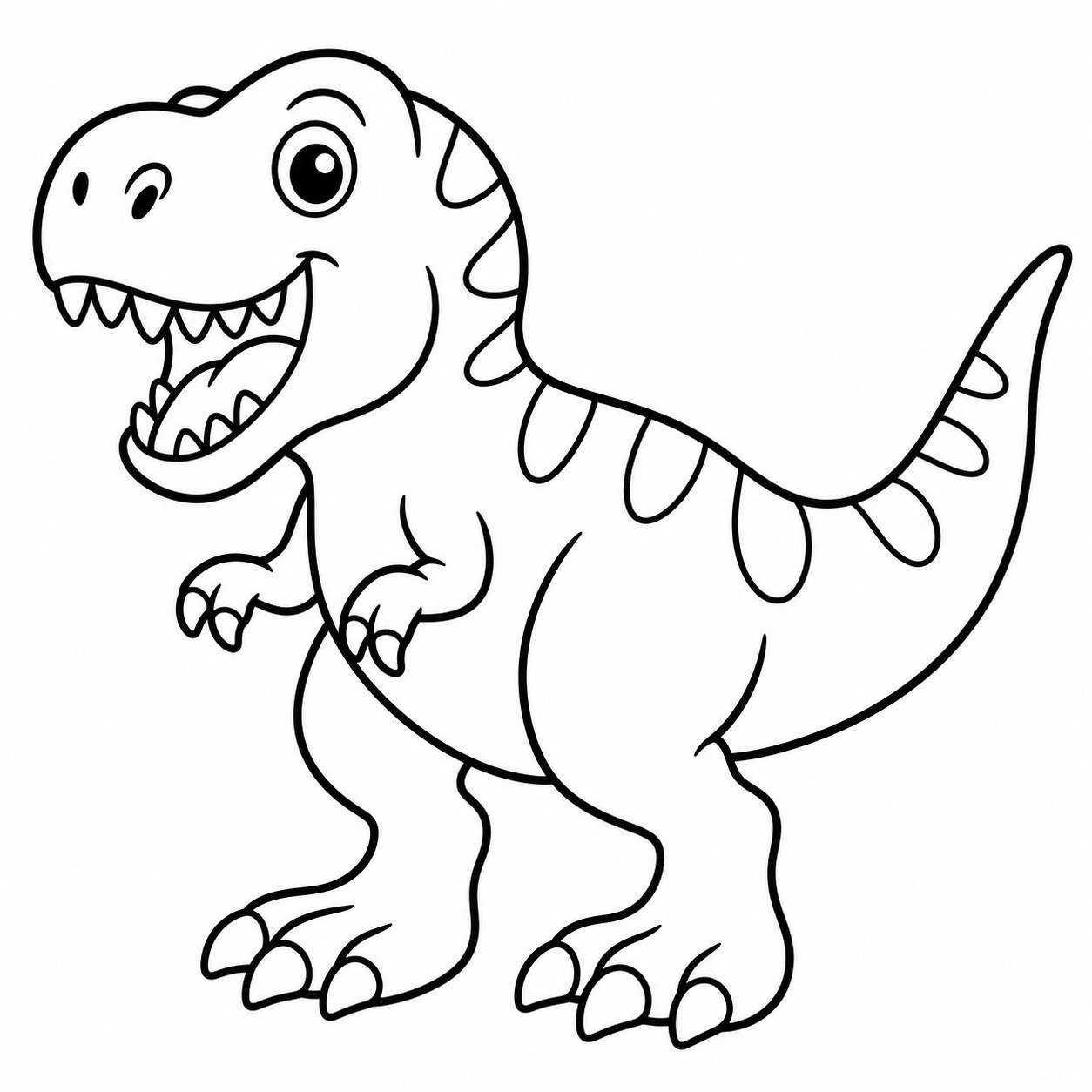 T-Rex Roaring
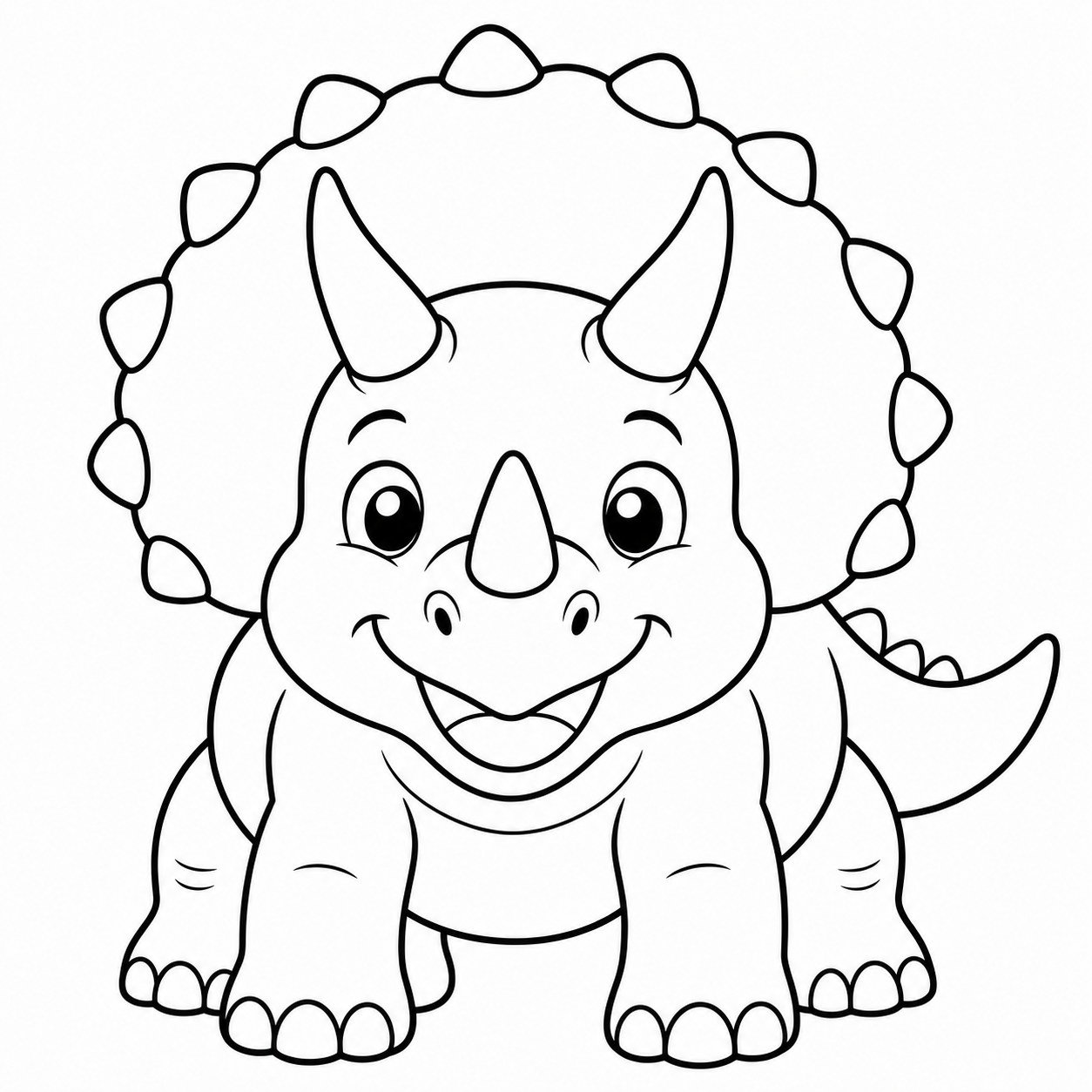 Friendly Triceratops
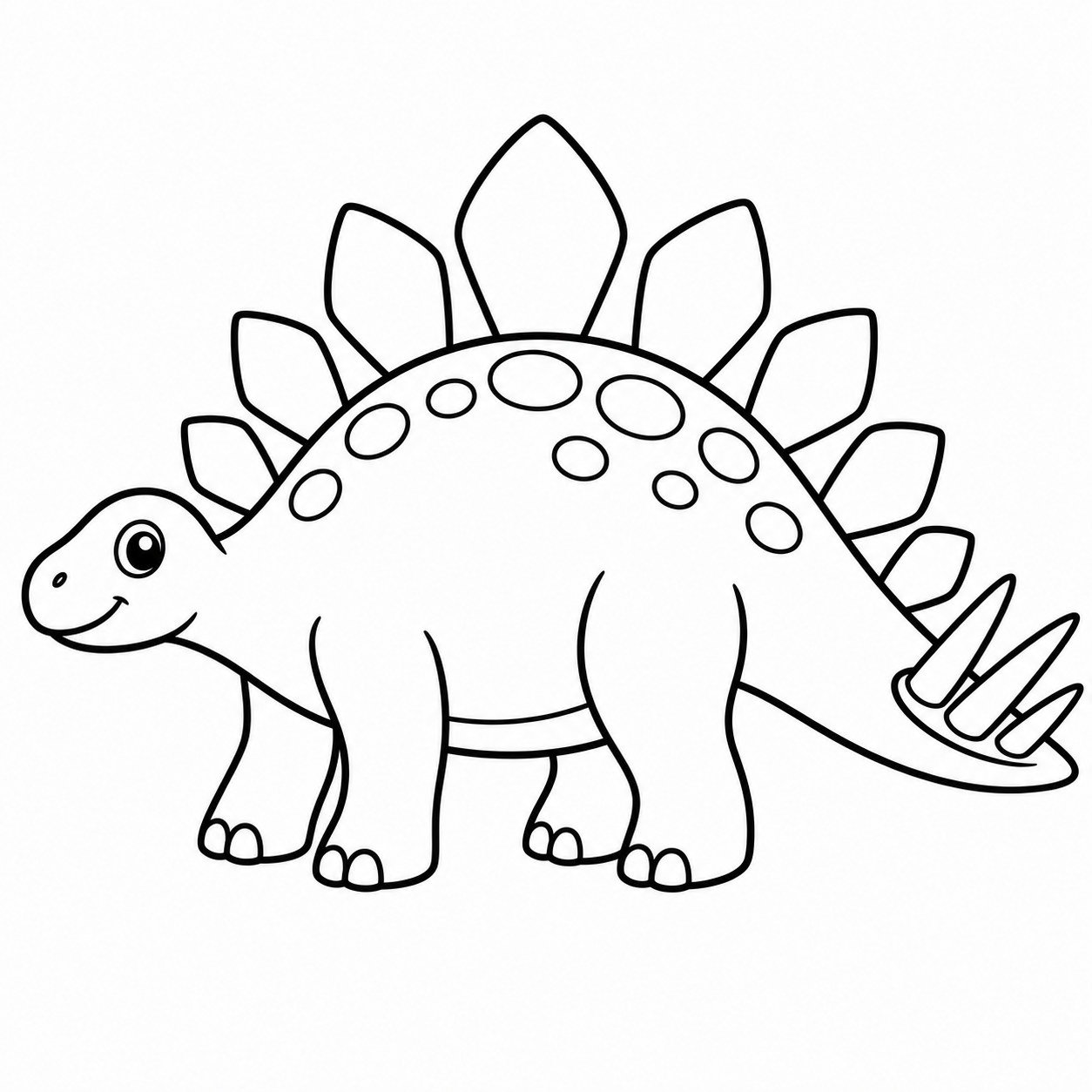 Stegosaurus with Back Plates
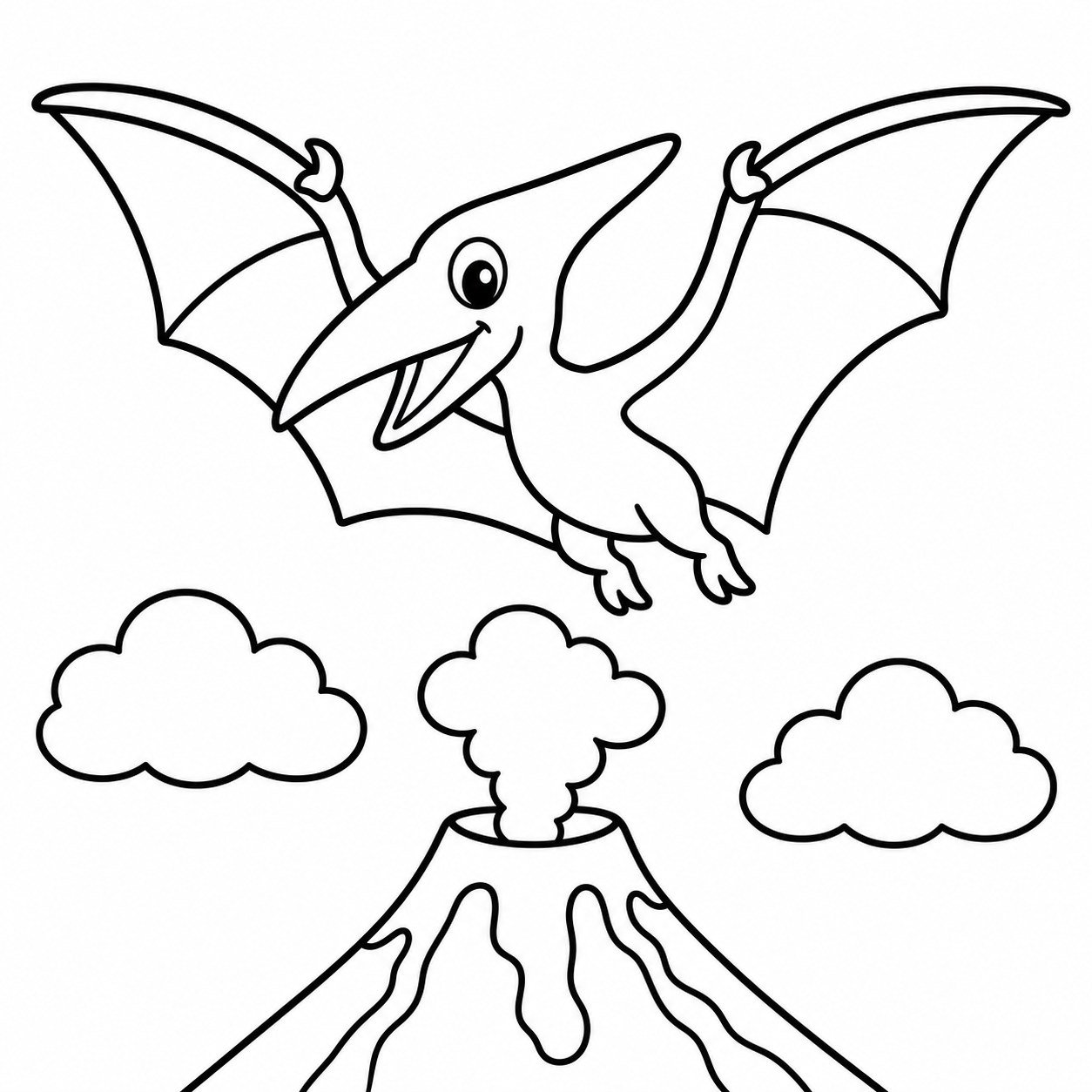 Pterodactyl Over the Volcano
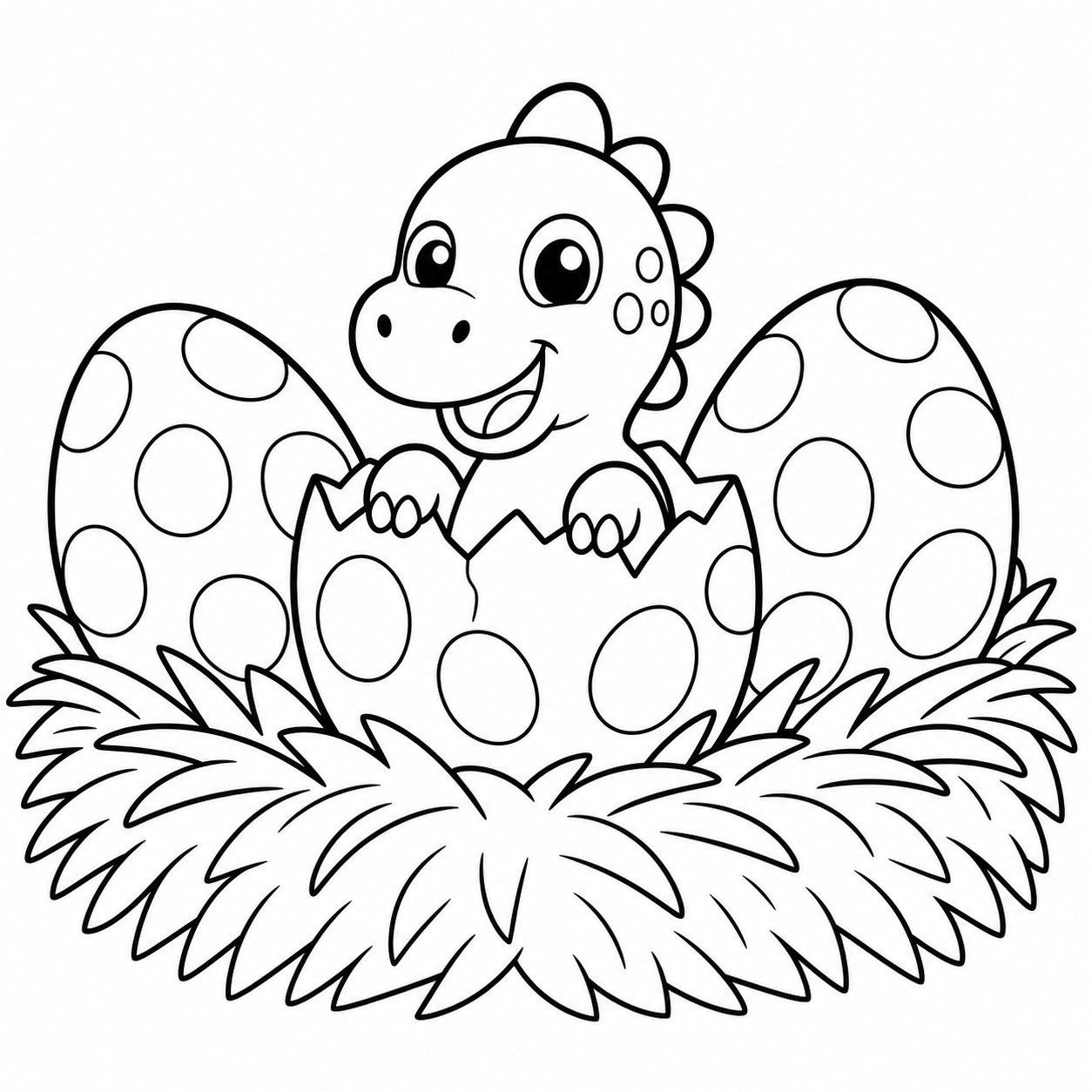 Baby Dinosaur Hatching
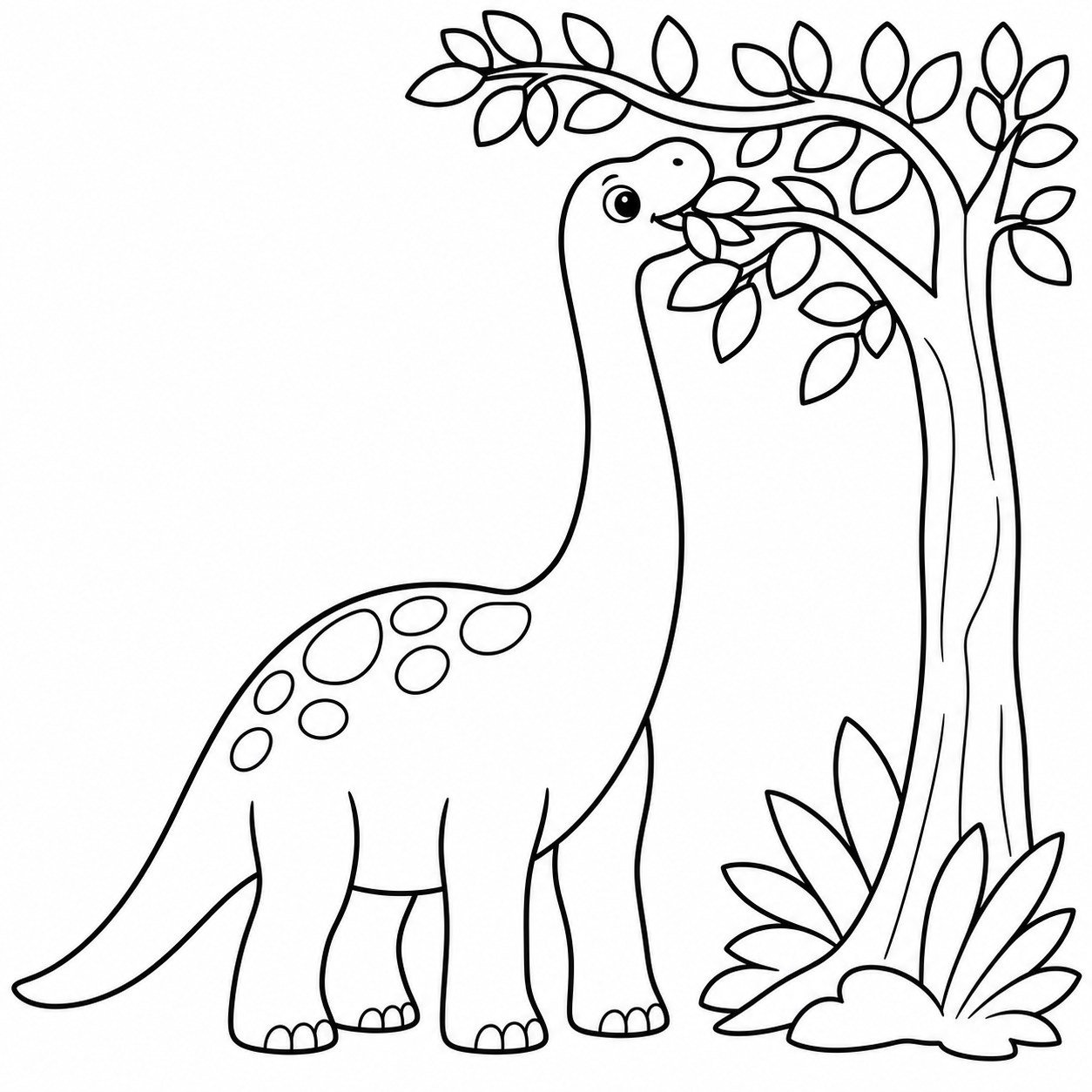 Brachiosaurus Reaching for Leaves
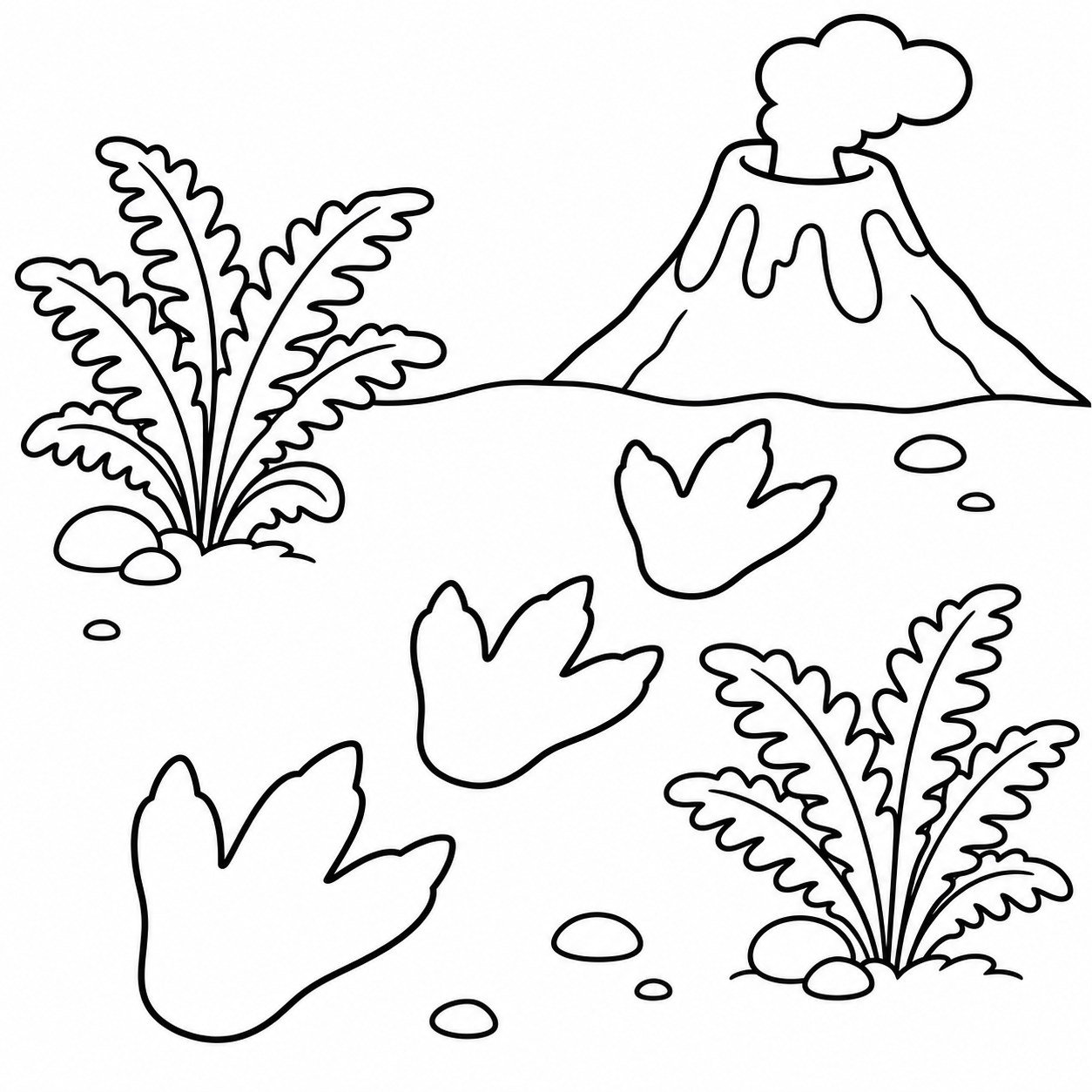 Dinosaur Footprints Trail
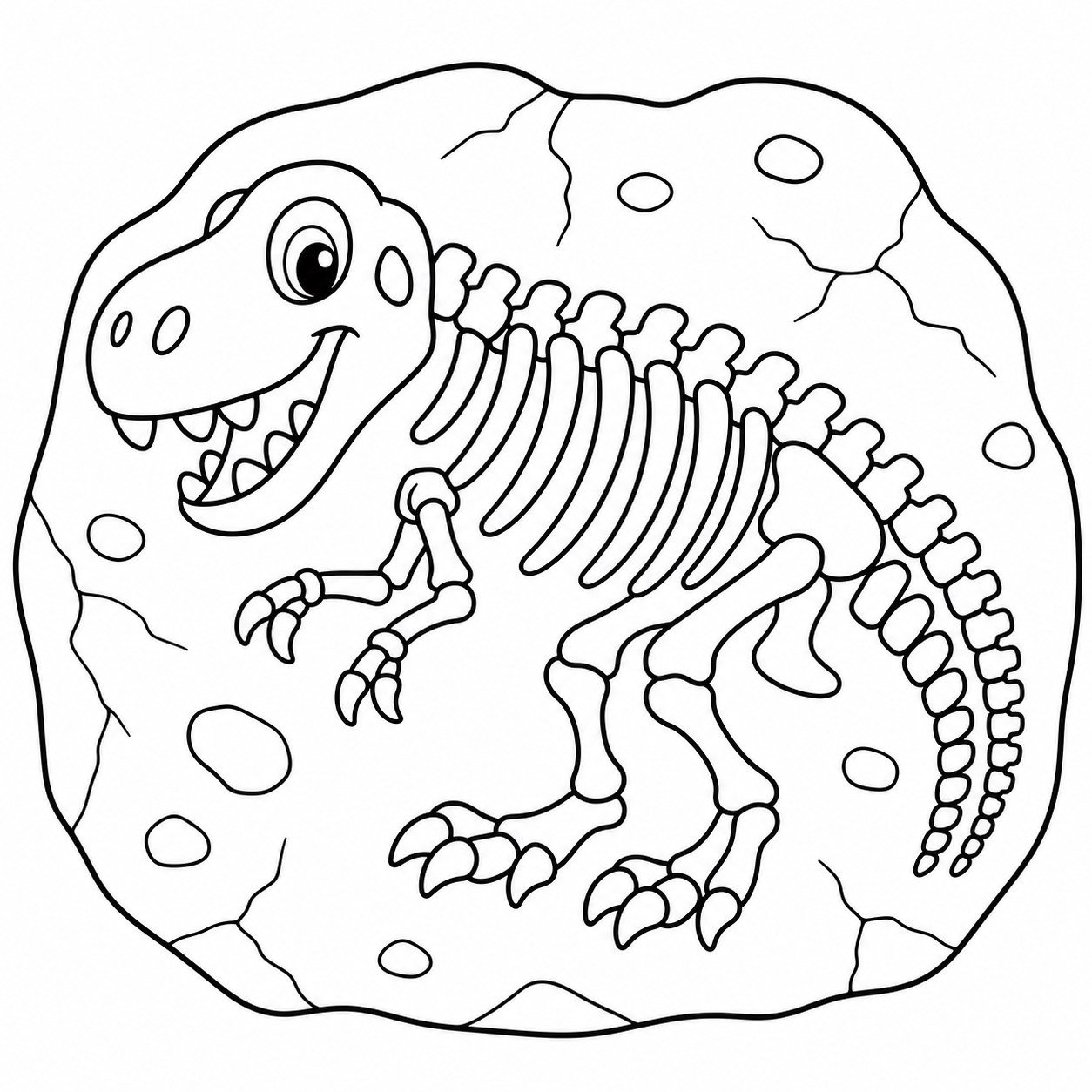 Dinosaur Skeleton Fossil
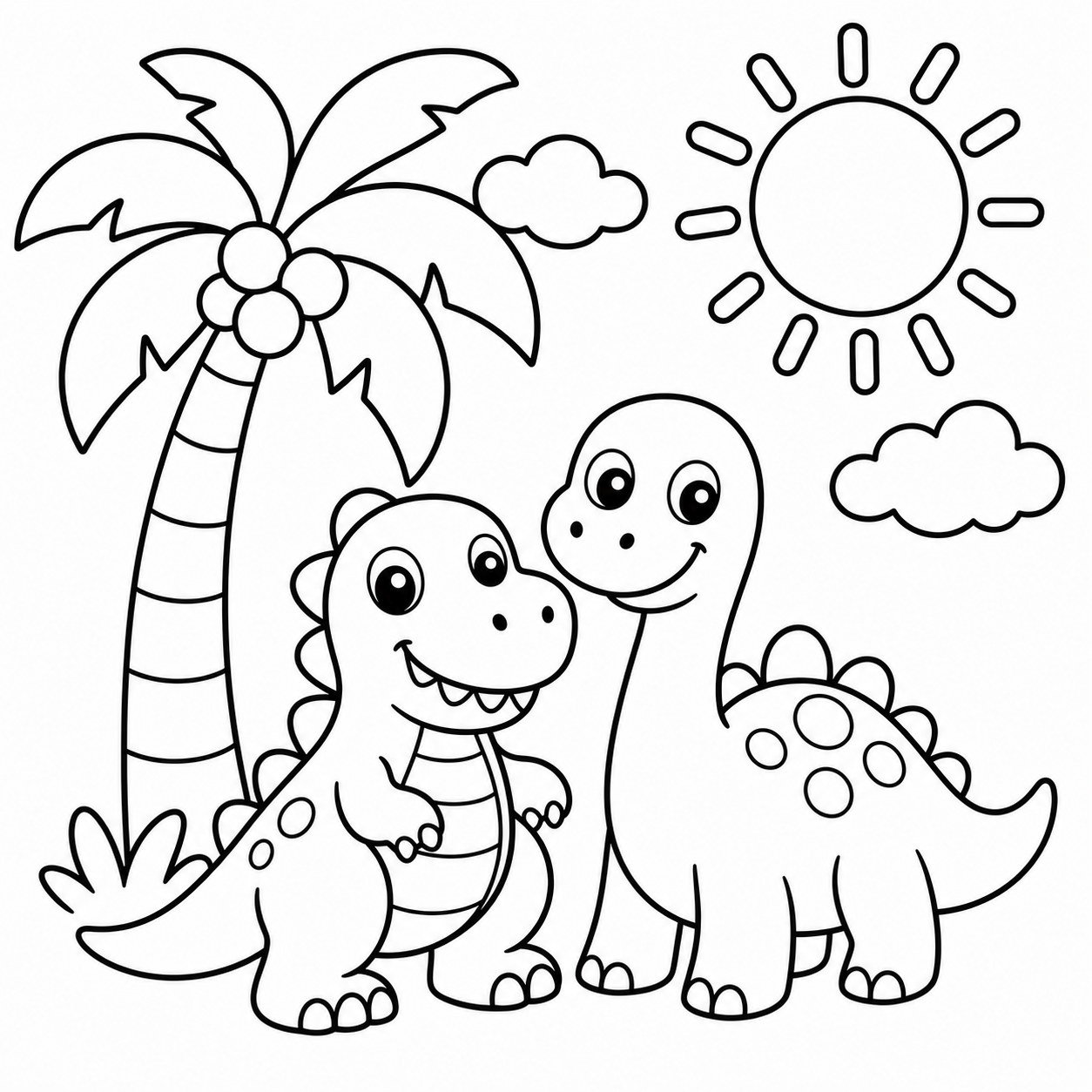 Two Dinosaurs by a Palm Tree
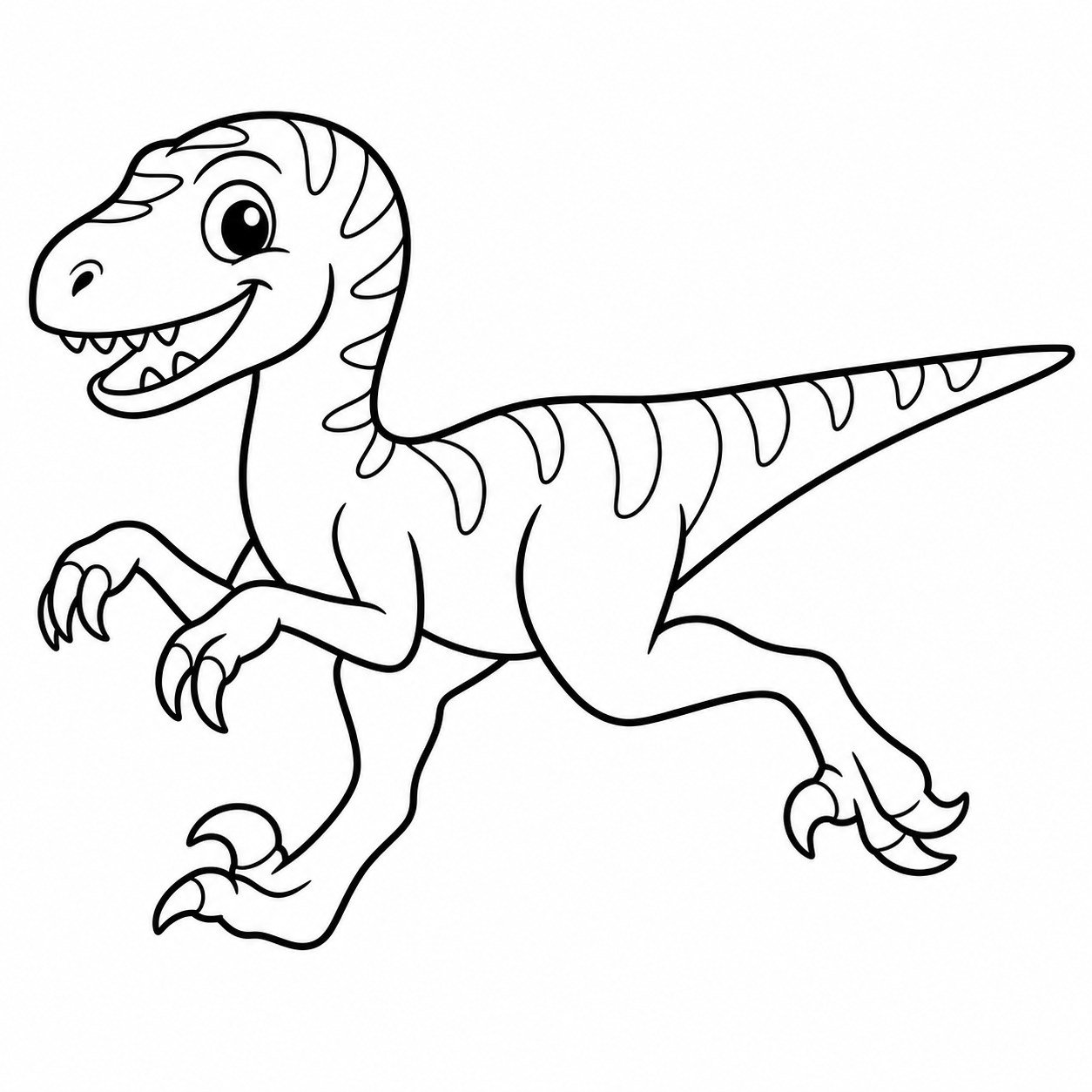 Speedy Velociraptor
Every dinosaur coloring page below is the same artwork you see in this gallery, so you can look first and choose later — on paper or on a screen.
One by one, with three ways to use each page
view · PDF · onlineUnder every drawing there are three buttons. View opens the page full size. PDF makes a print-ready file on your own device — your browser builds it, so there is no waiting for a server and nothing is uploaded anywhere. Colour online loads the same drawing into the studio, already zoomed to fit the screen, with the paint bucket selected.
T-Rex Roaring
A big-headed T-Rex stands on two legs and roars, with tiny arms, a heavy tail and three fat teeth showing.

Friendly Triceratops
A smiling Triceratops faces the reader with three horns and a wide frill behind its head, which is one big shape to colour.

Stegosaurus with Back Plates
A stegosaurus walks with a row of plates along its back and spikes on the tail; every plate is its own shape to fill.

Pterodactyl Over the Volcano
A pterodactyl glides with wide wings above a small smoking volcano, with two clouds left over for the sky.

Baby Dinosaur Hatching
A baby dinosaur sits in the top of a cracked egg in a nest, with two spotted eggs beside it — a page full of round shapes to fill.

Brachiosaurus Reaching for Leaves
A long-necked brachiosaurus stretches up to a branch, so the neck becomes one long easy stroke from head to body.

Dinosaur Footprints Trail
Large footprints march across the ground past two ferns and a small volcano, with plenty of open space to fill.

Dinosaur Skeleton Fossil
A dinosaur skeleton inside a rounded rock, for a slightly older child: ribs, spine and skull, with bones drawn wide enough to colour.

Two Dinosaurs by a Palm Tree
Two dinosaurs stand together beside a palm tree under a big sun — a good page for two children at one table.

Speedy Velociraptor
A velociraptor runs with its tail out straight and a grinning face, with feather tufts on the arms for a little extra detail.

Take the whole set as one PDF, like a small book
One press puts every dinosaur coloring page on this page into a single PDF, one drawing per page, sized for normal printer paper. Print it, fold it in half and staple the fold — you get a little dinosaur colouring book that survives a school bag. This also happens on your device; no file leaves it.
Two ways to get the book. The button above builds one PDF file on your device, and a status line tells you when it is ready. If that download is blocked, the button simply opens the print view underneath: press Ctrl+P (⌘+P on a Mac) and choose Save as PDF — one drawing per page, same result. In the print window pick portrait, margins “none” or “minimum”, and Two-sided — flip on long edge so it folds into a booklet.
🖨 Print view — all dinosaur coloring pages, one per page (no download, no scripts needed) hide this view
This is the book: every drawing on this page, one per sheet. Press Ctrl+P (⌘+P), set the destination to Save as PDF, and you have the same file the button above builds. Nothing here depends on JavaScript — it works even when downloads or scripts are blocked.
The complete dinosaur coloring guide
printing · tools · ages · classroomEverything below is written for grown-ups who are setting a child up with a dinosaur coloring page: which drawing to pick for which age, how to print it so the lines stay thick, which dinosaur coloring page suits a three-year-old and which suits a nine-year-old, how to turn a stack of pages into a booklet, and how to use the very same page in our online studio when there is no printer in the house.
01What makes a good dinosaur coloring page
A dinosaur coloring page is not simply a lizard with lines around it. The pages that children actually finish are drawn for the hand holding the crayon, which means four things at the same time: a thick outer line, big open shapes, a face with an expression worth colouring, and nothing so small that a stubby crayon cannot reach inside it. Every drawing in this set follows those four rules, so the dinosaur stays the star of the picture while the shapes stay easy to fill.
Thick lines do more than look bold. A line about two millimetres wide gives a young child a wall to stop against, and the eye follows a wall far more easily than a hairline. Big shapes matter just as much: a wide belly or a large frill can be filled in a few confident strokes, which is what keeps a five-year-old going rather than complaining. Tiny shapes are where colouring sessions die. A scale pattern made of thirty small diamonds turns a fun five minutes into a job, so on these pages texture is suggested with a few short marks instead of being drawn in full.
Expression is the third thing, and it is the one publishers forget. A T-Rex with a grumpy brow and a round belly is a character; a silhouette of a T-Rex is a diagram. Children colour characters. They decide the dinosaur is happy or sleepy or hungry, and that decision is the reason they stay with the page. The last rule, reach, is practical: if a shape is narrower than a crayon tip, the child cannot fill it, and the drawing ends up with white gaps that frustrate them for no reason.
One more mark of a good page is that it teaches something true. The friendly Triceratops has a frill because a frill is what a Triceratops had; the Pterodactyl has a crest; one page has feathers on purpose, because many theropods really were feathered, and the account of that discovery on Wikipedia is a genuinely fun read to share with a seven-year-old who thinks they know everything about dinosaurs already.
02Why a dinosaur coloring page works for small hands
Colouring looks like a simple activity, but for a four-year-old it is a full-body workout of small muscles. The hand must hold a tool in a stable grip, the wrist must steer, the fingers must control pressure, and the eyes must tell the hand where the wall of the line is. That cluster of skills is what developmental paediatricians call fine motor control, and it is the direct preparation for a pencil hold, a scissors line and a first attempt at writing letters.
Dinosaurs happen to be a very good vehicle for that practice. A stegosaurus plate is a hard-edged triangular shape, which asks for careful stopping. A long neck is a slow, wide stroke, which asks for endurance. A tail is a curve, which asks for a wrist movement that straight lines never teach. A footprint page is almost purely curves and ovals — the shape work of a toddler with a subject that feels grown-up. Compare that with a page of straight-sided buildings or a mandala, and the dinosaur page uses more of the hand.
There is also a motivation effect that no adult wants to admit. Children will colour a boring picture for three minutes and a dragon for twenty. Dinosaurs sit exactly in that sweet spot: unfamiliar enough to be exciting, friendly enough not to frighten a younger child, and rich in trivia that they get to repeat to anyone who will listen. That is the whole trick of a good dinosaur coloring page — it looks like play and is quietly doing the practice a therapist would charge for.
03Dinosaur coloring pages on paper or on a screen: how to pick
Both ways are legitimate, and neither replaces the other. Paper gives resistance: a crayon has to be pushed, and that pushing is the exercise. A screen gives correction: a fill bucket can colour a whole shape in a tap, and a wrong choice can be undone without ruining the drawing. Children need both skills, and on a bad day the choice is simply about what the house has room for.
Choose paper when the goal is the hand. A table, a sheet of newsprint underneath, a box of crayons, twenty minutes and no screens is the classic set-up for a reason. Choose the screen when the goal is the idea: a child who wants to try nine different colours on one Triceratops will exhaust a printed page in two, while the studio lets them change their mind forever. Choose the screen on a long journey, in a waiting room, in a restaurant, or when the alternative is an episode of television. Choose paper in the last hour before bed, because it stays in the bedroom and does not need charging.
Every drawing in this set is exactly the same artwork on both routes. Tap View to see it, tap Download to put the file on your device for printing, or tap Colour online to open that same page in the studio with the fill bucket ready. The American Academy of Pediatrics family media guidance is the sensible referee for the screen side: it is about what fills the hour and what gets pushed out, not about treating a tablet as a forbidden object.
04How to print a dinosaur coloring page so it comes out right
Printing is where a good page most often gets ruined, and usually for one reason: the printer decides to be helpful. Set these few options once, and every page from now on comes out the size and thickness you intended.
| Setting | Pick this | Why it matters |
|---|---|---|
| Scale | 100% or “Actual size” | Shrink-to-fit thins every line; a 90% print turns a two-millimetre wall into a hairline. |
| Page size | A4 (Letter in the US) | The pages are drawn square, so both fit with a comfortable edge. |
| Margins | None or Minimum | Bigger margins force the picture smaller, and small pictures are harder to fill. |
| Colour mode | Greyscale or Black and white | Colour mode burns three ink cartridges to print black lines and can leave a grey halo. |
| Draft mode | Off | Draft printing makes lines look broken, and a broken line gives a child nowhere to stop. |
| Two-sided | Only when making a booklet | For a single page, print one side so markers do not bleed onto the next sheet in the tray. |
Paper is the second half of the answer. Ordinary office paper at 75 or 80 gsm is fine for crayons and pencils and will let felt-tip pens ghost through to the sheet below; put a scrap underneath, or move to 120 gsm for a birthday pile of cards. If a page keeps coming out with pale lines, the culprit is usually a printer set to “draft” or a cheap ink cartridge, not the file — the file is pure black lines on white, with no grey anywhere.
Two small habits are worth keeping from the start: print four pages at a time so there is always a spare in the box for the shape a child decides to ruin, and put the print date on the back in pencil. Finished dinosaur coloring pages are artwork; dating them turns a pile of scraps into a folder a family actually keeps, and children notice the difference between a page that was binned and a page that was put away.
05Which crayons, pencils and paints suit each age
The tool decides how a child feels about the drawing more than the drawing does. A three-year-old with a fine marker will fail; the same child with a fat wax crayon will fill a belly and feel competent. This is the short version of what to hand to whom, and it is worth treating as a floor, not a ceiling — a child who enjoys a tool should keep using it.
| Age | Best tool | Skip for now | What to notice |
|---|---|---|---|
| 2 to 3 | Jumbo wax crayons, chunky beehive crayons | Pencils, fine markers, paints | Fist grip, big back-and-forth strokes, colour anywhere on the page is a win. |
| 4 to 5 | Standard crayons, thick washable markers | Detail pencils, watercolour sets | Beginning tripod grip, starts stopping at the line, names what they coloured. |
| 6 to 7 | Crayons plus coloured pencils for the nose and claws | Anything that needs steady pressure control | Chooses colours on purpose, wants two colours on one dinosaur, edges improve all year. |
| 8 and up | Pencils, felt tips, fine liners, cheap watercolour pans | Nothing — let them experiment | Layering, shading, background sky and ground, and opinions about which dinosaur is strongest. |
Wax crayons have an unglamorous history that explains why they are the default for small children: they are cheap, they do not dry out, they do not stain a sofa, and they need no precision — the crayon’s own Wikipedia article covers how a European sculptor’s idea of mixing pigment into molten paraffin became the box every grandparents’ cupboard has. If you want one upgrade, buy a box of “jumbo” crayons in twelve colours rather than a tin of sixty-four: fewer choices, fatter bodies, and a child who finishes a page instead of shopping.
For the online route the tool question disappears, which is one of its quiet virtues — a finger is a valid brush. Paints on paper are worth adding around age six with a muffin tin, one jar of water and a sheet of heavier paper, and are best kept for the pages a child does not mind ruining.
06Dinosaur coloring pages by age: what to expect
Print a page you know your child will beat, and then wait. The way a child colours tells you what they are working on, and it changes fast enough to be worth watching across one school year.
| Stage | What the page looks like after | What is being practised |
|---|---|---|
| 2 to 3 years | Strokes anywhere on the sheet, some lines missing entirely, the T-Rex is purple | Grip, arm control, cause and effect — the mark exists because I made it |
| 4 to 5 years | Most shapes inside the wall, one or two escaped, holes rubbed in thin paper | Stopping at an edge, pressure control, naming the colours chosen |
| 6 to 7 years | All shapes filled, background added, the volcano gets smoke, the sky gets a sun | Planning order, holding a pencil-like grip for a whole page |
| 8 to 10 years | Two shades on one belly, shading under the neck, “realistic” green and brown | Layering, mixing, persistence through a long page |
If a child is under four, hand them the footprint page or the two dinosaurs under a palm tree: fewer shapes, larger areas, and no expectations about what colour a hatchling should be. Between five and seven the whole set works, and the Triceratops and Stegosaurus are usually the favourites because they have big plate shapes that reward a slow stroke. From eight, the skeleton and the flying Pterodactyl start winning, because a harder page has become a badge rather than an obstacle.
One honest note on difficulty: a page can be “too easy” and still be the right page. Children return to what they can dominate, and repetition is how speed arrives. If your five-year-old colours the same dinosaur coloring page four times in a fortnight, that is not a stall — that is practice, and the fifth version will be visibly neater than the first.
07A ten-minute dinosaur coloring routine that actually gets used
The plan that survives a family week is small. Fifteen minutes after school or before dinner, one page, one bin for finished work, no expectation of tidiness. Colouring competes with screens for the same hour, so it has to be as easy to start as a tablet and more satisfying in the first sixty seconds.
What makes it stick is the stack. Keep a folder or a shoebox by the table with four or five printed pages in it, so a child never has to ask you to print something and you never have to stop what you are doing. Refill it on Sunday evening while the kettle is on: five pages, ten minutes, and the week is covered. When the box gets full of finished work, that is the moment to sit with your child and sort the pile into “keep” and “bin” — a ritual children take far more seriously than a sticker chart.
Two small rules protect the routine. First, never turn colouring into a lesson unless the child asks. If they say the T-Rex is blue, it is blue. Second, keep the eyes honest: the 20-20-20 rule used by the American Academy of Ophthalmology is a good one for a close-up activity of any kind, screen or paper — every twenty minutes, look twenty feet away for twenty seconds. On the tablet route that rule matters more, because a child holding a phone steady at thirty centimetres is also holding still with their hands.
And if a day arrives when nothing except the tablet will do, open the studio. Ten minutes of colouring a dinosaur coloring page on a screen is not the failure of the paper plan. It is the same drawing, the same naming of colours, and a finished picture in the gallery.
08Helping a child stay inside the lines on a dinosaur coloring page
“Stay inside the lines” is the single most useful thing a child is told about art, and the most over-rated. Inside lines is a motor skill that matures between four and seven; pushing it earlier buys frustration, not neatness. What you can do is set conditions where the skill arrives faster and with less argument.
Start with the border. Colour the outline of the dinosaur first, together, as a path to trace — a thick line drawn over the black edge with a crayon before the middle gets filled. Children who treat the wall as a road to travel rather than a fence to guard stop escaping over it. Then work from the middle of the page outward, because the shapes near the edge are the ones a child rushes to finish.
Shorter crayons are the second trick. A crayon snapped in half forces a tripod grip near the tip, and that grip gives far better control than a fist at the far end. Third: rotate the paper, not the child. Turning the sheet through ninety degrees on a curve keeps the wrist in its comfortable arc, which is exactly what an adult does without ever being taught.
Finally, choose pages that forgive. A page of large plates and a wide tail can absorb a lot of escaping crayon and still look deliberate; a page of thirty small scales punishes the same hand. That is a design question, not a child’s failing, and it is the reason the volcano and ferns on this set sit far apart — a dinosaur coloring page should reward an unsteady line rather than expose it.
09Colour mixing: the one skill a dinosaur coloring page teaches best
A dinosaur has no correct colour, which makes a dinosaur page the safest place in the house to experiment with mixing. Nobody can tell a child that a T-Rex cannot be purple with an orange belly, so they try it, and in trying it they learn something real about pigment.
The practical bit for wax and pencil: layering. A pale yellow under a pressed orange turns bright; a blue over a red turns ugly unless the red was laid down first and lightly. Show a child one mix at a time rather than the whole colour wheel. Two useful demonstrations are enough for an evening — green over yellow for a swamp dinosaur, and white crayon drawn first as a resist that paint slides off.
Then the honest science conversation, which children of seven and up receive with delight: most reconstructions of these animals are guesses, and the guesses changed. Feathered theropods, bright display frills, striped hatchlings — all of it arrived from fossils, comparatives with birds and crocodiles, and a lot of arguing. If a child asks what colour a T-Rex really was, “nobody knows, and that is the interesting part” is the correct answer, and their own dinosaur coloring page becomes evidence rather than a copy.
For older children a small palette rule raises a page instantly: two colours on the body, one lighter for the belly, and a completely different colour for the background, so the dinosaur separates from the sky. It is the same idea behind the art activities for children on the Tate’s site — contrast, not technique, is what makes a child’s picture read across a refrigerator door.
10Making a dinosaur coloring booklet at home
A stack of loose pages gets lost; a booklet gets finished. Making one takes about four minutes and the only tool needed is a stapler, so it is worth doing the first time a child asks for “another one”.
Take the single file that the download button on this page builds, or use the print view just under it. Print double-sided, flip on the long edge, then fold and staple twice on the spine. Because every drawing is square, the booklet sits comfortably in a bag and the blank page problem never appears. If you are using the print view instead of the file, set margins to none and put a pencil line in the middle of the back sheet as a staple guide.
Two details make it feel like a real book rather than homework. Write the child’s name on the front, “Book 1”, and a date; and leave the final sheet blank on purpose as a “draw your own dinosaur here” page. The blank last page is where the transfer from colouring to drawing happens, and it is the page that gets shown to everybody.
For classrooms and birthday tables, print the booklet on slightly heavier paper — 120 gsm handles felt tips without ghosting — and cut the stack apart for children who want one page rather than ten. If your paper comes from a supplier that lists certified sourcing, the little tree logo means what it says; the FSC site explains what each label covers, which is a decent five-minute lesson in its own right for a nine-year-old who has started noticing logos.
11Using dinosaur coloring pages in a class, group or party
A dinosaur page is one of the rare activities that works for a mixed-age group of eight children on a floor at once, and that makes it a professional tool rather than a rainy-day filler. The set-up that holds up across an hour is simple: pages printed one per child plus spares, a shared box of crayons per four children, a table edge or a clipboard so a child can rotate their paper, and a wall or a line of pegs for finished work.
For a birthday party, run it as an activity with a rule instead of a waiting time. “Give your dinosaur a background that tells a story” gets a volcano, an ocean or a city skyline on half the pages, and it stops the child who finishes in ninety seconds from wandering. Then hang everything and let the party vote on categories that no child can lose: best colour, scariest teeth, most surprising belly, best volcano.
For a classroom, one page covers several lessons at once. Print the footprint sheet and measure a stride; print the skeleton and talk about what a fossil is; print the feathered page and argue about evidence. Pair a one-line caption under each drawing – what is the dinosaur doing? – and the activity becomes writing practice with a crayon in it. And for a child who will not start, hand them the baby-dinosaur-in-the-egg page and sit down beside them: two minutes of parallel colouring is the most reliable prompt ever invented.
12Dinosaur drawing ideas to try after the dinosaur coloring pages
The natural next step after a child has filled several pages is drawing one themselves, and the bridge is shorter than it looks. Start by turning the page over and drawing the same dinosaur as a shape: an oval for the body, a smaller oval for the head, a triangle for the frill, a curved tail. Children who have coloured a dinosaur coloring page already know those parts — they have traced them with a crayon dozens of times — and saying so out loud is usually enough to unlock the drawing.
Then add rules that keep it playful rather than academic. One: no rubber, mistakes stay. Two: the dinosaur has to be doing something, not standing in a museum. Three: give it a face on purpose. A page of a Triceratops sneezing is a better drawing lesson than a carefully copied profile, because the child invented it.
Older children can go further. Draw a footprint trail and decide who made it; draw a dinosaur that has never existed and give it a ridiculous Latin name; copy the skeleton page from memory and check what they forgot — forgetting ribs is normal and funny. Draw the same animal three times: a baby, a grown-up, and one in the snow. All of that is colouring-book-adjacent and needs nothing but a pencil.
And when the drawing starts to matter to them, keep the finished pages in the folder with the coloured ones. History of the medium is on your side here — the modern colouring book started as a printing trade for teaching children to shade illustrations, and nobody thought it was the end of drawing. It was the warm-up. Two dozen dinosaur coloring pages later, your child is warmed up – and the page they draw next will be a dinosaur, because that is the animal their hand already knows.
A dinosaur coloring page without tears
for grown-upsQuestions parents and teachers ask first
Are these dinosaur coloring pages really free?
Yes. Every drawing here is free to view, to download as a PDF, to print for your family or class, and to colour in the online studio. There is no sign-up, no watermark and no page you have to unlock.
Why does the button say Download instead of PDF?
Because that is what happens on your device: the file comes down. Behind the button the page builds a proper one-page PDF with your drawing on an A4 sheet — but if a browser or a filter stops that, the picture file is downloaded instead and it prints the same. So the word on the button is the honest one.
Can I use one picture on my own website or worksheet?
Please link to this page instead of re-hosting the files, so the drawing keeps coming with credit to ColoringVemsy and the same free terms. For anything else — a school pack, a printed hand-out with a different layout — write to us and we will say yes to almost any classroom request.
Is the download a real PDF or just a picture?
A real PDF. Your dinosaur coloring page sits on an A4 sheet with its name on top, built in your browser; nothing is uploaded anywhere. Print it straight away or keep the file for later.
What colour should a dinosaur be?
Any colour your child chooses. Nobody knows what colour these animals were, and a purple T-Rex is a decision, which is exactly the thinking we want a colouring page to produce. For a child who wants accuracy, green, brown and grey with a lighter belly is the usual reconstruction.
My child is three. Are these too hard?
Start with the footprint page or the palm tree: bigger shapes, fewer of them, and no expectation about colour. A dinosaur coloring page with lots of small plates or feathers can wait a year or two.
Will these work for a classroom or a birthday table?
That is what they are best at. Print one per child plus a few spares, give every four children one box of crayons, and ask for a background. The volcano, the palm tree and the nest are all there to be filled in.
Can we colour on a phone instead of printing?
Yes — tap Colour online on any page and the same drawing opens in our studio with the fill bucket ready. It works on a phone, tablet or laptop, and the finished picture can be saved as an image.
More animals to colour
The dinosaur coloring pages sit inside a growing set of animal drawings. If your child finishes one page and asks for another, one of these takes over the job.
Pingback: Elephant Coloring Pages — 10 Free Printable Elephant Coloring Pages for Kids & Adults (PDF)
Pingback: Coloring Elephant Pages — 10 Free Printable Coloring Elephant Pages for Kids & Adults (PDF) | ColoringVemsy
Pingback: Cute Dinosaur Coloring Sheets – Free Printable PDF
Pingback: Realistic Dinosaur Coloring Pages – Free Printable PDF
Pingback: Coloring Pages of Cute Dinosaurs – Free Printable Sheets
Pingback: Christmas Dinosaur Coloring Pages – Free Printable PDF